The Day of Vyshyvanka

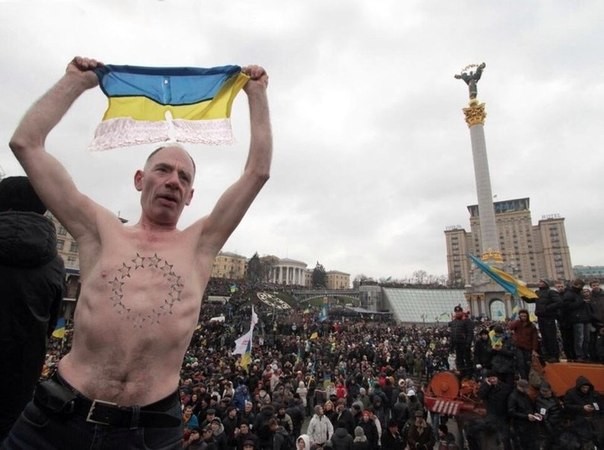
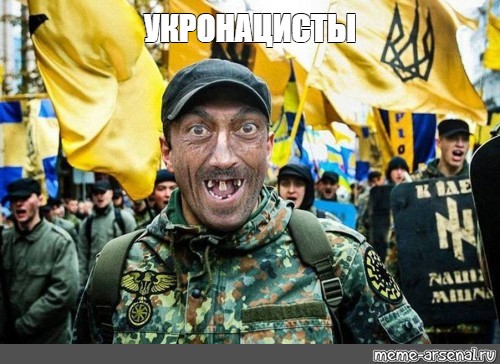
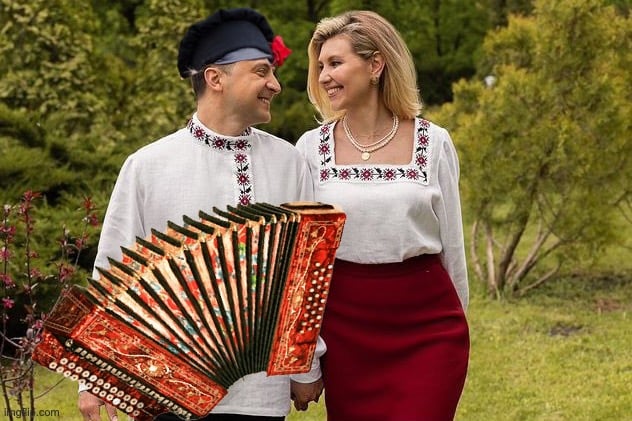
The vyshyvanka is a traditional embroidered shirt or tunic warn in all of the Russias. It is traditional to Belarus, Greater Russia, and Ukraine but only in Ukraine did this become a national garment that even has its own holiday. In Russia, only ultraconservative weirdoes wear this. This is literally medieval cosplay kind of clothing. It probably became popular first in Western Ukraine around the turn of the nineteenth and twentieth century, and it had a lot to do with the local Ukrainian nationalists LARPing as Cossacks. In the post-Soviet days, this fetish has infected the rest of Ukraine because the government of Ukraine likes promoting the culture of West Ukrainian nationalists…

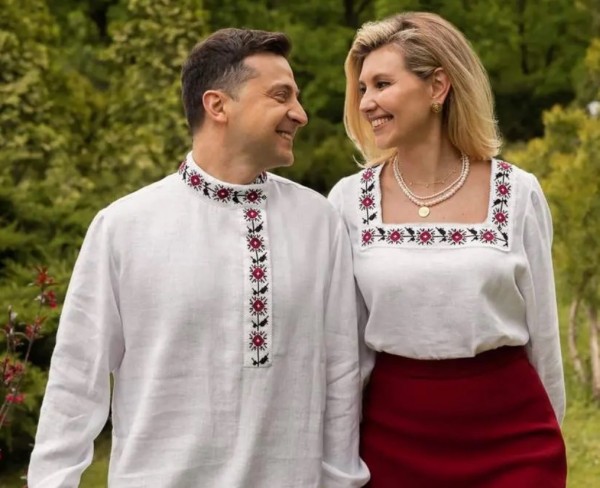
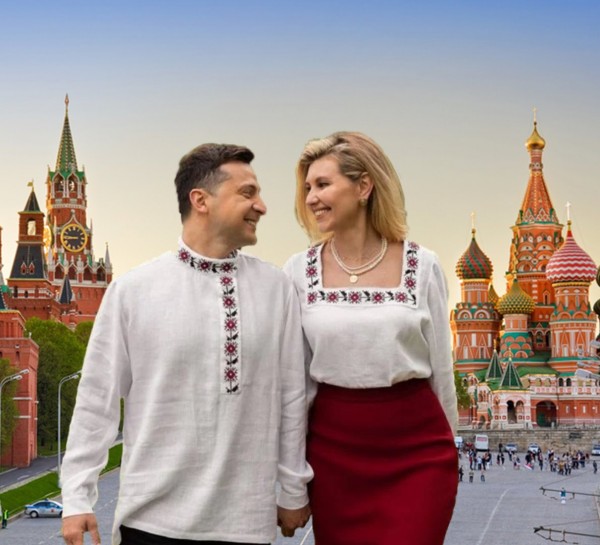
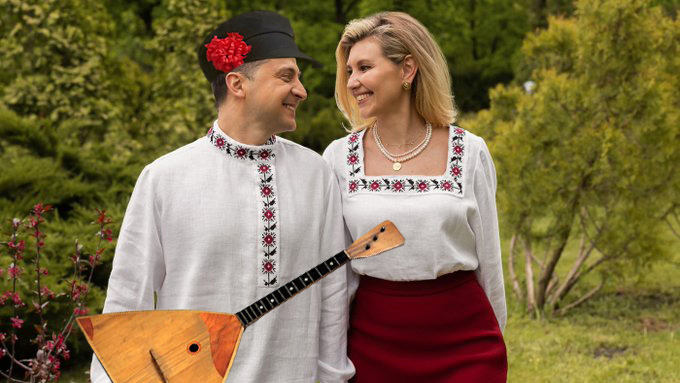
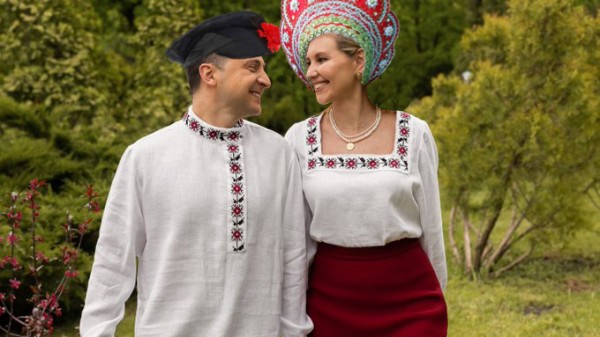
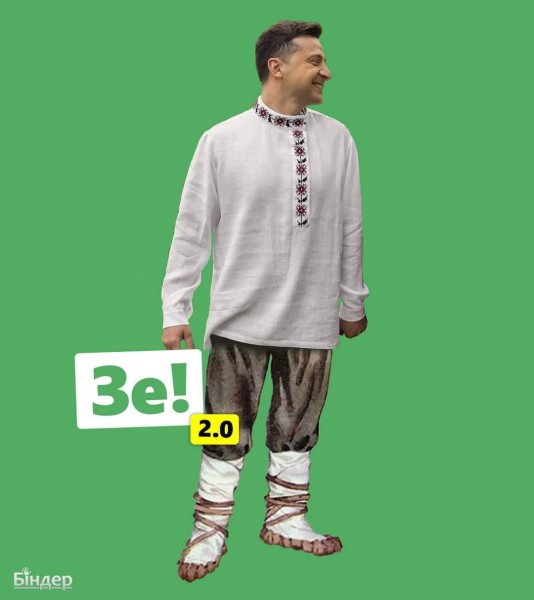
But something went wrong:

The president, Zelensky wore a Russian style kosovarotka. And the kosovarotka is well, Greater Russian…

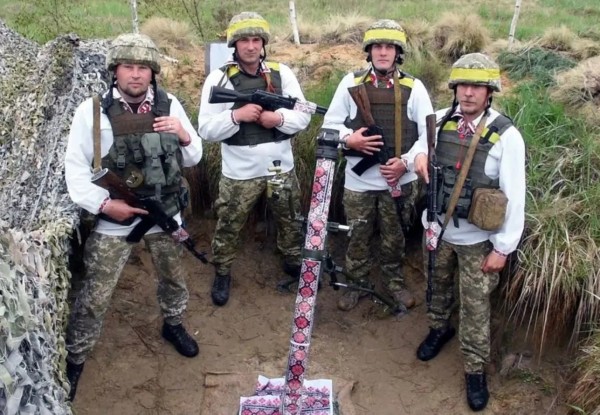
Meanwhile in the trenches of Donbas:

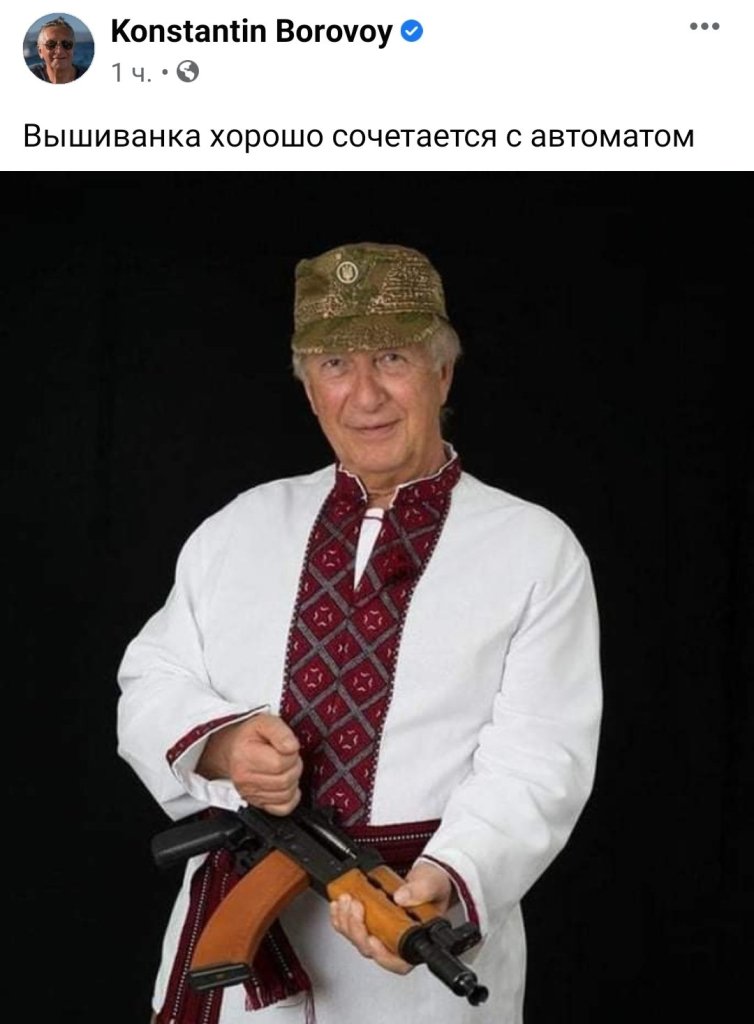
Konstantin Borovoy

Vyshyvanka goes well with an automatic rifle

Warmongers

It is easy to be a hero in the safety of a peace zone, isn’t it boys?

The following is a dialogue between Masi Nayyem, a Kiev based lawyer, and a brother to Mustafa Nayyem, and Yuri Butusov, who was described by the Rutgers Professor, Alexander Motyl as the best military analyst. I am not certain Motyl knows what he is talking about. Mustafa Nayyem’s historical significance was calling the first demonstration of the Euromaidan, otherwise he ain’t shit, just like the rest of the Maidan heroes.

It extremely hard to comprehend that we are just standing still and waiting. Because expectations in the end (the sum of its parts) only lead to greater loss of human lives. A rhetorical question: if we decided to attack the Russian Federation, would there be fewer casualties in total?

Because personally, I am only waiting for a command of the Commander in Chief. May they make this decision soon.

Good Soldier Nayyem

Yuri Butusov

We do not need to attack the Russian Federation. We need to take back what is ours and win in the Donbas.

Masi Nayyem

Yura, that’s akin to painting a wall on a rotten wall. They will attack again and again. We will have to take it back again. What is the point?

From here

Presenting Semantic Visions, They Claim to set the Record Straight

The Czech Republic is awash with projects claiming to fight Russian disinformation…

The Semantic Visions is a company owned by my high school classmate, Jan Barta. I know Mr. Barta very well and have been at his chateau recently. Back in school we drank together and did mischief. I know his character well, and I must say he is a total Russophobe. His family was forced to leave Czechoslovakia and he himself was born in the United States. Enough reasons to hate the Russians. But on this blog I do not condone individuals that are driven by emotions, especially if they try to influence the public. You do not have to love the Russians but in the interests of our country, you should keep the head cool, which is something Barta is incapable of, and we have all heard stories about his cocaine problem (not like yours truly is innocent in this but Barta’s case was way out of hand).

The mission of the Semantic Visions is to fight disinformation, particularly that coming from Russia but also domestic, say for instance in connection with the Covid pandemic. The Semantic Visions considers as disinformation, anything that conflicts with the official line, according to Wikipedia. This means that, for instance, should you criticise the wearing of face masks, saying that the unfortunate populace that wears them breaths all the dust that settles on the cloth, and there isn’t any proof they help to mitigate the spread of the illness, you are guilty of disinformation. Such an orientation is totalitarian but such is any such project dealing with disinformation in the Czech Republic. And there are quite a few, I wonder how does the Semantic Visions fare in such a saturated market? We already have European Values, and Manipulatori.cz to name a few. But then again, I do not mind Russophobic scum spending money on fighting wind mills, it is their business, I just reserve the right to call them out.

Let’s have a look at Semantic Visions report about Russian disinformation in connection with the Vrbětice scandal. It will help us understand what they are all about. I quote from their summary:

Czech disinformation sources are pushing staunchly pro-Kremlin coverage of the GRU scandal, in line with their established history of Kremlin-aligned and anti-Western agitation. These sources frequently amplify Russian disinformation narratives and official Kremlin talking points, and support domestic political actors that advocate populist, pro-Kremlin positions, like the far-right SPD party, the Communist Party (KSČM), and the notoriously Putin-friendly Czech president, Miloš Zeman.

It is a testament to the illness of the Czech politics that the president, who does not have much power in our parliamentary democracy, and two opposition parties that each do not score over 10% in the national elections, are the only people, who are asking for concrete evidence the Russian superagents, Petrov and Boshirov were behind the explosions. The public hasn’t seen any such evidence, only fakes and gibberish of the official media.

However, despite their proKremlin orientation, the majority of these sites have no evident links to the Russian state, and do not produce content in coordination with Russian media. Their primary drivers are profit (i.e., ad revenues) and social influence.

Actually, most of these so called pro-Russian people are more staunchly pro-Czech than they are in any way pro-Kremlin. Unlike the people that have set up the Semantic Visions, there are people, and they are many, who think that it is in the interest of our country to have healthy relations with Russia. And unsubstantiated accusations and Russophobic hysteria is not conducive to building an environment of trust between the two nations.

And yes I love the clicks. I would go even further here, and say most Czech outlets that display pro-Russian orientation do so because they are disgusted with what is happening in Czech politics and media. The way the Czech Television, publicly funded through TV license, lied to us during the Ukraine crisis made many turn to blogging for better or worse.

Specifically, Czech disinformation media have sought to ridicule and discredit the official government account of what happened in Vrbětice, in particular the evidence of Russia’s involvement. To this end, they have offered several alternative explanations as well as conspiracy theories about the government’s motivations for pointing the finger at the GRU, suggesting that it is a ploy to escalate the conflict between Russia and the West, instigated by the United States.

For many months, the US State Department voiced its displeasure with Czech plans to buy Russian vaccine, Sputnik V, and the possibility of Russian nuclear power company, Rosatom winning the competition to build additional blocks of the Dukovany power plant. Then suddenly, Vrbětice hoax was planted. The Czech secret service, the BIS, which is long suspected to be linked with Western intelligence services put a wrench into these plans with a cool story about Petrov and Boshirov.

The Russian disinformation response to the disclosure of the GRU’s role in Vrbětice was immediate and has followed the same blueprint as in other cases where Russia’s criminal activity has been exposed, like the annexation of Crimea and the Skripal poisoning. Russian officials and pro-government media deny any Russian involvement in the explosion and dismiss the Czech government’s response as an attempt to score points in Washington’s “war of sanctions”. Indeed, the dominant narratives in Russian media alternatively attribute the scandal to US puppeteering in the Czech Republic and the alleged “Russophobia” of Czech authorities. In this context, there is a noteworthy difference in the negative coverage of Prime Minister Babiš’s government, which has mandated the diplomatic expulsions and considers the GRU attack an act of state terrorism, and positive coverage of President Zeman, who has falsely claimed that there is no evidence of Russian intelligence involvement in the explosion.

If the Czechs ridiculed the Petrov and Boshirov affair, the Russians were laughing out load and remembering the Good Soldier Švejk. Motherfuckers from Semantic Visions are welcome to visit Crimea and tell the locals the Russian actions were criminal and they should all return back to fascist Ukraine into the warm embrace of Stepan Bandera. And then continue to Donbas and tell everybody how nice Ukraine is, and Russia is criminal.

The Czechs have literally admitted they are facilitating the sale of weapons to Ukrainian Nazis and Sunni fanatics in Syria. This is something incredibly shameful.

Pro-Kremlin disinformation efforts in both Russia and the Czech Republic received a significant boost from a speech by President Zeman, made on April 25, in which he contradicted the official Czech government position about the GRU’s involvement and suggested instead that the explosion may have been caused by the mishandling of ammunition. The speech was heavily promoted by Russian-language media, which praised Zeman for not “caving in” to pressure from the United States. Czech disinformation websites likewise endorsed it as a “voice of reason” amid all the “Russophobic hysteria”.

Russophobic hysteria is exactly what the Semantic Visions is trying to peddle here. Zeman is a man of honour here, and because I am certain none of the fuckers in Semantic Visions voted for him, even I did not, at least here you see why the public chose this guy twice.

The Kremlin’s disinformation campaign is unlikely to subside quickly, considering the strategic interests are at stake. Beyond dealing a major blow to Russia’s intelligence infrastructure in Europe and unifying Western allies in stronger opposition to Russian subversive activity, this latest scandal jeopardizes two of the Kremlin’s key strategic objectives: 1) to win soft power points through the provision of the Sputnik V vaccine to more European countries, and 2) to secure the contract for the Czech Dukovany nuclear plant, worth more than 10 billion USD, on behalf of Rosatom. Such control of critical energy infrastructure is a key vector of Russian political and economic influence in Europe.

Guys, this is exactly why the Vrbětice hoax was planted. But here we see another common element, which the fighters with Russian disinformation display. They are trying to tell the public that the Czech space is somehow important to Russia. If they told the truth, and that is that the Czechs are basically viewed by the Russians as a bunch of hillbillies worthy of 20 minutes of air time whenever they do something stupid against Russia, they would likely have to close shop.

Russia is scoring points with the Sputnik V vaccine elsewhere, and an ethnic bantustan of 10 million people does not really interest it, and they do not care what the Czechs think. It is in the interest of the Czechs to have a vaccine, and it is the Czechs that have a low rate of vaccination so far. I have seen the Victory Parade in Moscow yesterday, and nobody was wearing a mask. While Czech pubs are closed, pubs in Russia are opened. Who really gives a damn if the Czechs do not want to be saved?

As for Dukovany, one Rosatom CEO, a Czech guy by the name Šíma, even said that Rosatom is building over 30 reactors worldwide, and one more reactor in the Czech Republic is not going to change much. Bankrupt Westinghouse that is being passed around like hot potato between investment funds is welcome to build nuclear power plants for twice the price but I have doubts anything will actually be built. I have yet to see any coherent energy strategy that does not include nuclear energy and natural gas, and a lot of this depends heavily on Russian supplies. We will have a low energy future if we listen to Semantic Visions. And low energy future will bring us closer to Ukraine.

***

So to sum up, Semantic Visions is selling a Russophobic snake oil, and I am already a bit tired of the Vrbětice affair. However, another related article is coming up…

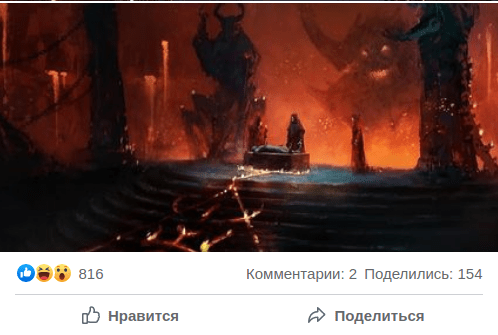
They Have Seen Diablo and Mordor

Alyona Yakhno – Ukrainian journalist

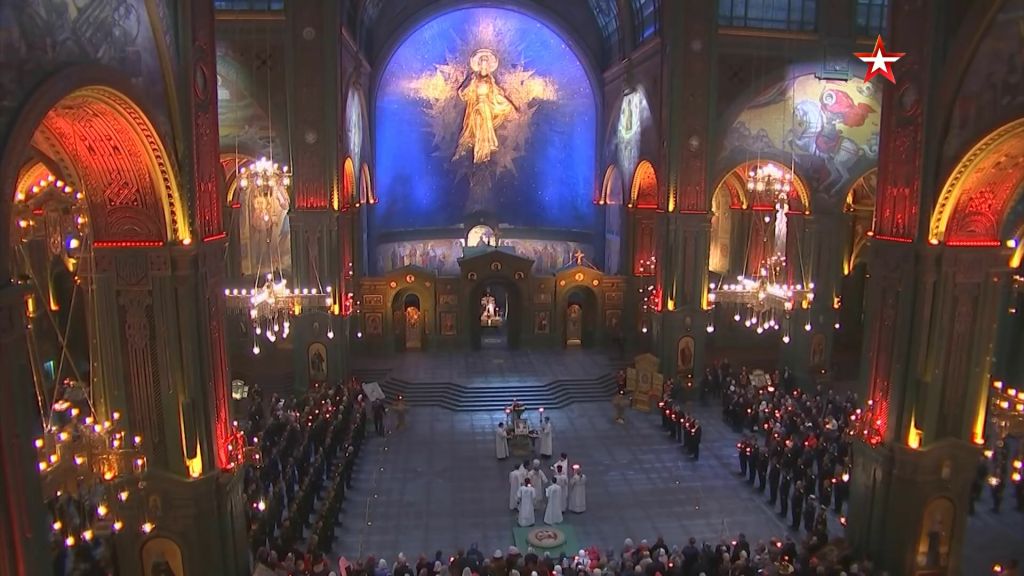
This is exactly how the main church of Mordor (the Main Cathedral of the Armed Forces) looks like. An appropriate colour expression. And if you add the Ball of Woland as a soundtrack, the harmony would be perfect.

El Murid – Anatoly Nesmiyan, a Russian blogger, who writes about geopolitical issues but often writes complete nonsense

At first I thought those are screenshots of the interiors in the Diablo game. But no, it has proved to be completely normal. This is the celebration of Eastern in the main temple of Shoigu (Russia’s defence minister). This military cult gathering place should look precisely like this on this celebration of light.

***

I don’t know what beef El Murid has with the Russian military, and quite frankly do not want to know. However, I have been to many dark churches in my life, across the Orthodox World. In the Holy Land, in Georgia, in Constantinople, and in Russia as well, and I wonder how they celebrate the Easter there?

Ivan Yakovina – Ukrainian blogger, who is just as full of shit as Mr. El Murid Nesmiyan.

Vladimir Putin celebrates Eastern in the main church of the Russian military, where Hitler’s hat is being kept. (yes, the place also includes a museum) The second picture is the opening of the portal in the game Diablo. Find 10 differences. Everyone laughed at Shaman Gabyshev but he was proven right.

***

Yes, portal to hell and schizophrenic Gabyshev will lead to peremoha for Ukraine. However, the reality of the church is likely much less mordoresque than cheap Ukrainian propagandists and other assorted idiots would have you believe…

This dear readers is how many Russophobic memes are being created. Recently I came across many Ukrainian accounts trying to give off a Bulgarian Romani ghetto as a reality of life in Russia. Mind you, you are wasting your life if you are getting information from any such sources…

Biden Comes out as Putler Killer Cultist

So, as you may have probably heard, the senile president of the United States called Vladimir Putin a killer, after being asked in an interview if he thinks Putin is a killer…

Putler Killer has been a meme the Russophobic circles in the West have now peddled for some time. But what to make of it. I will tell you what to make of this. Biden is a senile old man, and a leader of a declining power. Russia is on the rise, and the more Russia strides forth, these old Russophobes will more hysterical. But otherwise, such comments are nothing to worry about. For instance, Boris Johnson likened Putin to Hitler in 2018, and predictably UK-Russian relations were getting progressively worse…

Yeah, Putin is Hitler and he is a killer, and he is the best leader Russia had in decades.

Russia Slows Down Twitter

Roskomnadzor, the Russian agency that monitors and sanctions media has decided to slow down Twitter…

RIA Novosti reports that such a decision was taken because the website refuses to block illegal content. The moderators of Twitter have allegedly failed to remove 3,168 publications containing calls for suicide, child pornography and about the use of drugs.

That is, Roskomnadzor does not care that people with a pro-Russian opinion (see here and here) are massively being blocked by US social media sites, and they come up with a lame justification for why an American tech giant should have their work made more difficult in Russia.

I personally believe that American websites such as Twitter, Facebook, Google and YouTube ought to be blocked in Russia (a market of 150 million people) as an answer to US and Western sanctions. These billion dollar businesses would be easier to ban than food imports. It is not like Facebook is something you necessarily need for living.

The Good Guys

Check out this infographic that I discovered…

Where is the lie actually? Did not the EU and affiliated groups pump money into destabilizing Ukraine in 2013-2014? If the EU did not provide support for what is happening in Ukraine, nothing would happen in Ukraine. The sanctions enacted by the West literally are governments shooting business into the foot with the hope that it will hurt the Russians. The Russians meanwhile found non-European (in many cases domestic) alternatives, and Crimea still belongs to Russia. Have the sanctions influenced anything?

Yes they actually did. In many areas where Russia depended on Western resources and services, Russia began a search for substitutions. Even in areas which were not sanctioned, that is because the threat of sanctions is in itself a sufficient motivating factor. In any case, the loser here is Western business.

I am glad there are still sensible politicians here in Europe.

The infographic comes from a fancy Ukrainian effort (probably Western funded) to combat Russian disinformation.

Why do We Need the EU to Determine What Medicines to use?

The major objection of Russophobes towards Sputnik V, the Russian anti-Covid vaccine, is that it first needs to go through approval of the EU Medicines Agency before their respective countries accept it. Acting unilaterally like we have seen in Hungary or Slovakia brings out indignation…

The question nobody asks is why do we need another EU organ to determine what is safe and good? Why can’t we do it here and now? This dear readers is how the EU works, by undermining in people the faith in national institutions and replacing those with transnational bodies that are said to be more trustworthy than the local governments. This is why many would gladly delegate their decision making to organs in Brussels, where decisions are made in the ideologically proper manner.

So, when a bunch of leftists from Italy, Spain, France and Germany in the EU parliament decide the Czech Republic, Poland and Hungary must help their countries alleviate the burden of letting in hundreds of thousands of illegal immigrants, what are the people that cannot even make a decision on a vaccine going to say then? I personally hope they will fear the wrath of the populations they represent. But meanwhile, I urge you all to vote right-wing parties that want good policies, and FUCK THE EU in 2021…

There isn’t any Space for Holodomor Propaganda in Russian Donbas

So I ventured to the Atlantic Council and found an article discussing a recent forum held in Donetsk called Russian Donbas, where the head of RT, Margarita Simonyan called for Donbas to be reintegrated with Russia…

There some Lithuanian Russophobe discusses the doctrine of the Russian Donbas, which is the intellectual blueprint for the aims of the Donbas republics, which is the reintegration with the motherland. There he writes:

The Russian Donbas doctrine is the latest example of the Kremlin’s enthusiasm for rewriting history in order to suit its contemporary political requirements. This tendency to distort the past has been central to the information war that has accompanied Russian aggression against Ukraine.

Well, OK…

When Russian forces first seized Crimea in spring 2014, Moscow propagandists were quick to declare that the Ukrainian peninsula had “always been Russian.” In reality, Crimea is an ancient land with a recorded history stretching back almost three thousand years that includes extended periods as part of the Byzantine Empire, Golden Horde, and Ottoman Empire. Meanwhile, Russia’s involvement in Crimea began comparatively recently in the late eighteenth century. Clearly, it is nonsensical to claim that this highly cosmopolitan geopolitical crossroads has “always been Russian.”

Please show me any academic Russian historian that made the claim that Crimea was always Russian. If anything, Crimea was a territory transferred from the RSFSR to Ukraine by the Bolsheviks, who have created Ukraine as we know it. I understand that in the Atlantic Council they prefer narratives that would derusify the Russian history of Crimea.

Regardless of whether the authors were Ukrainian, Russian, or Western, most traditional academic histories of the Donbas have tended to focus on three key aspects of the region’s early development. These accounts typically begin with details of how the Donbas was first colonized by Ukrainian Cossacks and peasants, who moved into the borderland regions previously known as the “Wild Fields” following the gradual retreat of the Crimean Khanate.

Next came waves of colonization from different parts of Europe and beyond. This was followed by an extended period of intensive international involvement that fueled the industrialization of the region throughout the second half of the nineteenth century.

Western investors and industrialists were instrumental in the development of the Donbas, bringing vital capital and technologies to the region. The most famous of these was Welsh businessman John Hughes, who founded Donetsk in 1869. The city was called “Hughezovka” in his honor until 1929, when it was renamed “Stalino” by the Soviet authorities.

The Russian Donbas doctrine outlined in Donetsk on January 28 made barely any mention of these crucial factors in the history of eastern Ukraine. Instead, the discussion focused almost exclusively on Russians who played prominent roles in the region’s growth.

The Ukrainian Cossacks and peasants did not have any notion of being Ukrainian. They thought themselves as Orthodox Russians. The region was always international and Russian was the lingua franca that served the people as means of interethnic communication, and the Russian people are an amalgam of ethnicities united by loyalty to the Russian state and the Russian language. Ukrainians on the other hand are an ethnographic subgroup of Russians that aims to build a separate nation and state.

There was no mention of the systematic Russification policies adopted during both the Czarist and Soviet eras, and no room for an honest exploration of the Holodomor, the artificial famine engineered by the Soviet authorities in the early 1930s that killed millions of Ukrainians and ravaged the region. Other Soviet atrocities were similarly ignored.

However, forum delegates did find time to condemn the Ukrainian authorities for recent efforts to return historical names to towns and cities throughout the Ukrainian-controlled areas of the Donbas. This was portrayed as evidence of the Ukrainian government’s anti-Russian policies.

Kremlin efforts to criticize the Ukrainian authorities for the “Ukrainianization” of Ukraine speak volumes about Russia’s deeply entrenched imperial thinking. This kind of ideology has roots stretching all the way back to the Czarist past, an era when Ukrainians were branded “Little Russians” and their language was suppressed as a mere dialect.

The only systematic nationality policy in Ukraine was Ukrainization under the Soviet union, which was presented in waves because Ukrainization always finds resistance from the people. The Russification of the late Tsarist era also came in waves because it encountered resistance in Central and Western Ukraine but it was much less systemic. Obviously, there is no way a Russian patriot would be interested in some Ukrainian nationalist bleating about how bad Russians Russified Ukraine.

Now, the author does show an absence of knowledge of Ukraine. the region itself was only joined to Ukraine by Lenin. It had nothing to do with any Ukrainian state prior to that and the names of cities all appeared during the Late Tsarist and Soviet eras. They either bear the names of the early settlers, communist revolutionaries, or something unrelated to Ukraine. For instance one village was called Novgorodske, and was given back its old name New York, which was probably a remnant of the early British colonization of the region but was renamed in 1951, right at the start of the Cold War. I don’t know where you see Ukrainization in the decision to give this town its old name, not even Ukrainization in inverted commas.

I am glad that the people of East Donbas are free from Holodomor propaganda because Holodomor is hateful hype of anti-Soviet forces. You see, the famine of the 1930s is a real event but Holodomor is something else, it is a spin on that event. In that interpretation, the famine was engineered by the Soviets to kill Ukrainians, and in the modern interpretation Russians are blamed for it. It first appeared in the press of Nazi Germany, which had a strong community of Ukrainian exiles from the Skoropadsky regime and was coaching Ukrainian nationalists to fights against Poland and the Soviet Union.

The story about the artificial famine was widespread in Western Ukrainian circles before WWII and that is why today, we see more people in Western Ukraine believing in Holodomor than in Eastern Ukraine where it actually happened. When I asked my relatives if my great grandmother, who was a Ukrainian peasant, ever spoke about Holodomor, knowing she was no fan of the Soviet government, I was told that she never did. She only complained about being made to work in a collectivized farm. She was not subjected to Holodomor propaganda. Famine was something that she experienced thrice, during the Civil War, during 1930s, and in the 1940s during WWII. My grandfather had to leave Ukraine and fend for himself after the War, he joined the military and moved across Russia.