How the Union Leads to Ruin in Ukraine

The Uniate Church and the Ruin are two concepts from Little Russian history that inform the Ukrainian reality of today…

From the olden days, the Holy See in Rome sought to conquer the Holy Rus’. Alexander Nevsky had to repel an invasion of the Teutonic Knights but there was a much more fearsome foe than the knights, the Rzeczpospolita, the Polish-Lithuanian Commonwealth. Both constitutive realms of this empire began expanding their domains into Rus’ already in the fourteenth century with the seizure of Halychyna by the Kingdom of Poland. Coincidently, a gene test my brother did shows we are descended from the Lithuanians that conquered Rus’ and there is family legend about a “Polish” ancestry on my Russian side.

There was a difference in faith, while the Westerners answered to the Pope, Rus’ answered to the Eastern Churches and eventually, Moscow became free of Constantinople following the Ottoman conquest, and the only rightful spiritual authority in Rus’. Fearing this Muscovite influence, the Polish masters of Ukraine decided to bring the Orthodox Churches under Roman Catholic control. In 1595 at the Union of Brest, the bishops of Little and White Russia under Rzeczpospolita accepted Roman domination. Several decades have passed and a rebellion erupted in Little Russia, which saw the Cossacks swear fealty to the Russian Tsar. This has plunged Ukraine into a destructive period known as the Ruin, which resolved itself really only in the eighteenth century with the Russian Empire coming to dominate the entirety of Little Russia, and the neutralisation of the Rzeczpospolita.

But unfortunately, the Russian Empire failed to take Halychyna in the division of Poland. Halychyna, or Galicia as it is also known, is a part of Rus. West of Lvov, there lies a town called Rava Rus’ka, that’s where Rus’ begins and it goes all the way to Vladivostok. Halychyna fell under the Austrian rule, and the Uniate Church survived there. This later served as the nucleus out of which will rise Ukrainian nationalism. Starting in the second half of the nineteenth century, the Austria-Hungary, as the Habsburg realms came to be known, entered into alliance with the German Empire, the Russian Empire joined France in an Entente. The Habsburgs became enemies of Russia.

Maxim Sandovych

Austria was faced with a problem of Russians on its territory. The Austrians viewed so called Russophillism of many of the inhabitants of Halychyna with suspicion. Thousands of people from Halychyna made annual pilgrimage to the Pochayevskaya Lavra, an Orthodox monastery right across the border from Austrian Halychyna in the Russian Empire. The Austrian authorities began repressing the local Russophiles. Maxim Sandovych, an Orthodox covert from the Uniate Church was tortured to death by the Austrian authorities prior to the First World War. After the Russian defeat by the Central Powers in 1915, the Austrians have interned the Russian population in concentration camps in Terezín in Bohemia, and in Thalerhof in Styria. Wikipedia has this to say about Thalerhof:

The Austro-Hungarian authorities imprisoned leaders of the Russophilism movement among the Carpatho-RusynsLemkos, and Galicians; those who recognized the Russian language as the literary standard form of their own Slavic dialects and had sympathy for the Russian Empire. Thus, the captives were forced to abandon their identity as Russians and obtain a Ukrainian identity. Captives who identified themselves as Ukrainians were freed from the camp.

Terezín became the site of a genocide again during WWII, when the Jews were interned there.

Simultaneously with the repression, the Austrians have supported a development of a Ukrainian identity that would be different from Russian. Remember dear readers, national identities are always imposed from above and people can always be reprogrammed. Polish nobility long toyed with the Ukrainian idea. According to Mikhail Onufrienko, a blogger from Kharkov that now lives in Crimea in exile, the idea to rename the South Western part of Rus’ into Ukraine originated already in the sixteenth century with the Jesuit envoy, Antonio Possevino. Part of the reason the Polish rebellions against Russian rule of the nineteenth century failed was because the Russian peasants didn’t go along with their Polish masters. Many of these Poles and early adepts of the Ukrainian national idea fled to Austrian Halychyna, where they continued their work with Austrian support.

A good example of the Austrian support for Ukrainian nationalism is Mikhailo Hrushevsky, who was given a cushy job of a professor in Lvov and a hefty grant to write Ukrainian history, a historical conception that removes Ukraine from the common Russian history. If you were to write the true history of Ukraine, you would have to start with Nikolay Kostomarov, Ivan Franko, the afore mentioned Hrushevsky, and not somewhere deep in the past, like in the Cossack period. The Cossacks referred to themselves as Russians. I would not even speak much about Shevchenko, who also identified as Russian. But Hrushevsky did just that, relabelled them all as Ukrainians. I call the conception that Ukraine emerged out of Ukrainian nationalism, which was heavily supported by the enemies of Russia, “a short history of Ukraine.”

By the First World War, there was a sizeable community of newly created Ukrainians in Halychyna. The first time the nationality “Ukrainian” appeared officially was in 1916, when the future Emperor Charles I inspected the troops in Halychyna, and declared everyone in the camp to be Ukrainian. After the revolution in Russia, the Communists, who were opposed to Russian nationalism made the decision to break down the Russian nation by employing the Austrian project, and began a programme of mass creating the Ukrainians. For this purpose, they brought many teachers from Halychyna, including the aforementioned Mikhailo Hrushevsky. Russia’s Ukrainian headache is a bolshevik legacy.

Early Ukrainian nationalism was very much centred around the Uniate Church, the Austrians viewed the papists as loyal citizens. Ukrainism was therefore an extension of the previous Union, the Union of Brest. In more recent times an idea of a united Europe appeared, and since the 1990s, the European Union is bringing these ideas into reality. But parallel with the European Union that we all know from the European Parliament, and the European Commission, there is also a spiritual union and the ideological founder of European integration, the Pan-European Union.

The importance of union with Rome has slightly diminished in recent times with the decline of Catholicism and religiosity in the West, and the centre of control gravitated eventually to Brussels. However, there is a lot of “Habsburg” influence on the symbolic basis of the EU. You see, the Pan-European Union has given the European Union all of its symbols. The circle of twelve stars:

The twelve stars symbolise the twelve signs of the Zodiac, and the number 12 stands for completion and perfection. Note the Cross, as if indicating an inheritance from the Roman Catholic project. The secular EU, and the European Council of course do not have the cross in their flag. Furthermore, the anthem of the European Union, the Ode to Joy, was adopted by the Parliamentary Assembly of the Council of Europe in the 1970s on the suggestion made in 1955 by Richard von Coudenhove-Kalergi, a son of a Bohemian Nobleman and an upperclass Japanese gaijin chaser, the founder and the first head of the Pan-European Union. Now check out the Ode to Joy on the Euromaidan, they even created new updated lyrics for it in Ukrainian. After Coudenhove-Kalergi, the head of the Pan-European Union was Otto von Habsburg.

Petr Fiala, the current head of the Czech Civic Democrats with Berndt Posselt, the current leader of the Sudetendeutsche Landsmanschaft, and Otto von Habsburg at a Pan-European meeting in Moravia. Habsburgofilia is strong for some reason in the Czech Lands.

It seems like the Austrian nobility found itself a new tool of domination. They have switched Catholicism for European integration. Ukraine suffers a new period of strife currently, Ruin 2.0, caused by a desire for another Union, as expressed in the Cargo Cult festival, the Euromaidan. Ukrainians seem again victims of some Austrian voodoo. And the EU is not even able to make Ukraine a candidate for membership.
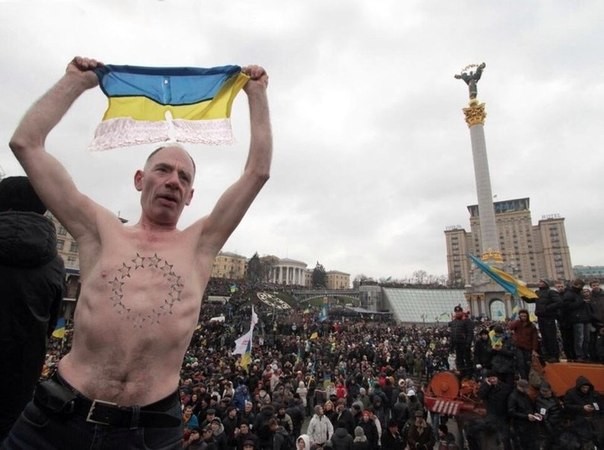
Don’t be a cuck, don’t fall under the spell of an Austrian voodoo. Although, I have to say many adepts of Ukrainism are also adepts of another Austrian voodoo, created by the arch-opponent of Coudenhove-Kalergi.
Chechens From the Battalion of Sheikh Mansur Were Put on a List of Criminal Authorities

A small prehistory. Simulating the work of a government, the President of Ukraine, Zelensky decided to compile a list of crime bosses that the National Security Council will enact sanctions against…

Volunteer Chechens looting a store…

Fist scandals surrounding the list are beginning to come to the surface. Chechens from the battalion of Sheikh Mansur that fought in the Donbas appeared there. This army unit was wild for a long time and did not answer to civil command. Outside the warzone, they have had a number of criminal episodes.

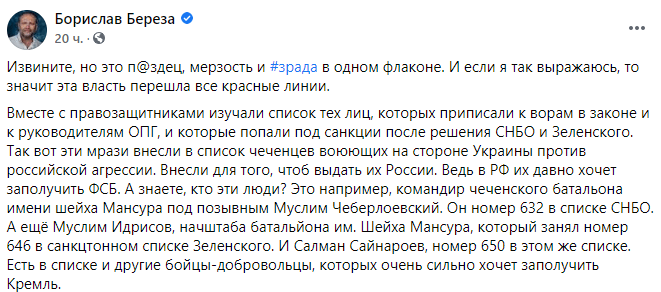
Boryslav Bereza

I am sorry but this fucked up and zrada in one cup. And I must say this government has stepped over all red lines.

Together with human rights defenders we have dissected the list of names, allegedly being the heads of criminal organisations, and that have received sanctions from the security council and Zelensky. Well, these bastards have brought into the list Chechens that have fought on the side of Ukraine against Russian aggression. They have put them on the list to extradite them to Russia. They are already wanted by the FSB. Do you know who they are, the commander Muslim Ceberloevsky, #632 in the security council list, and the chief of staff of the Sheikh Mansur Battalion, Muslim Idrisov, whi is #646 in Zelensky’s list of people to be sanctioned. Salman Saynaroev is #650. There are other volunteer fighter, whom are wanted by the Kremlin.

Dmytro Yarosh

Dear ladies and gentlemen

Ukrainian journalists

I would like you please to share this text

I have received information that the “sanctions of the security council” have been directed against out brothers in arms from the volunteer battalion of Sheikh Mansur, our Chechnyan brothers.

I would like you to give as much hype as you can to this astounding fact!

I am suspecting, Kremlin agents that have infiltrated into the Ukrainian security forces and the government are engaged in an operation to destabilise the situation in the country with the aim to expand the area of aggression and full on invasion of Ukraine.

That why the agents of the Kremlin have inserted into the list of thiefs, bandits, anti-Ukrainian elements, people who have fought side by side with us, and walked the road of War with us in 2014, they have defended our freedom and independence.

I am warning the government: We will not allow our brothers to be extradited to the enemy…

If we are to use force to defend them, we are ready…

I am hoping on the patriotic, and pro-state opinion of the secretary of the security council and the officers of SBU and the Ministry of Interior!

Death to the Russian Federation!

Glory to Free Ichkeriya!

Glory to Ukraine!

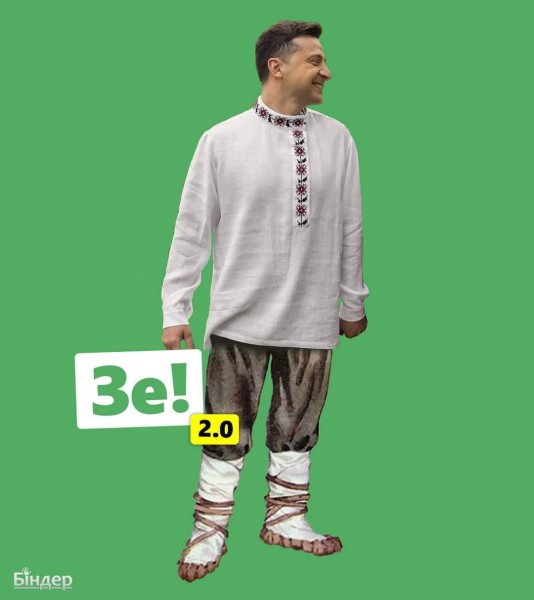
Give the Eastern Slavs USSR 2.0

I don’t have the old sovok in mind. I mean a Union of Slavic States of the Rus…

Ahead of time…

The Eastern Slavs deserve an Empire with outposts in the Carpathians. This ideology presupposes the rejection of any propositions that do not lead to the unity of Eastern Slavs. Disunity and regional separatism is nothing but a method of the Collective West to weaken Russia and exploit its territory.

Anything that opposes the unity of Russia is actually a tool of the West to be used against Russia. The Ukrainian nationalism is a decrepit ideology of Petlyura, Bandera, Shukhevych, pogroms, Babiy Yar, Khatyn’, The Odessan House of the Trade Unions. It is an evolutionary dead end. The Ukrainian nationalists haven’t won any of their territories and must give them back to the Russian people. Ukrnazis can relocate to Canada for all I care.

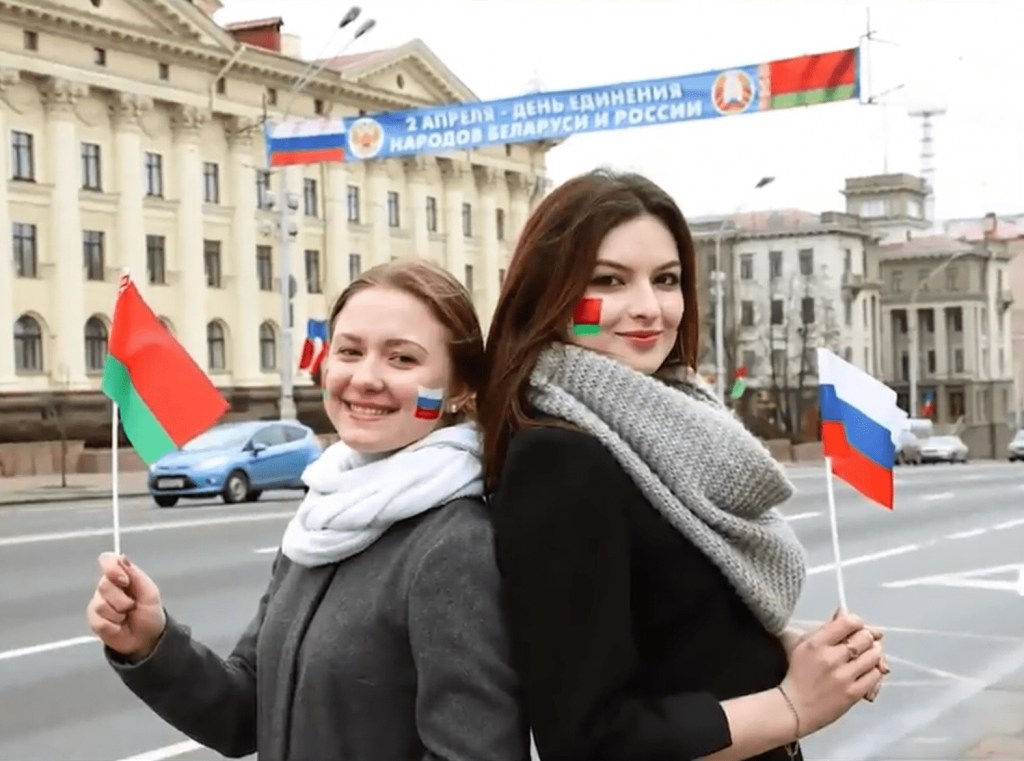
The Russian Federation and its ally Belarus must work out a way to neutralise and topple the regime in Kiev and install somebody that would realign the country East. An ideology of unification needs to be worked out.

New Ukraine will have:

  1. Russian made official on the entire territory.
  2. Trade Union with the Russian Federation and Belarus.
  3. Ukrnazis and any forms of Hitler onanism will be banned and Ukrnazis will be expelled to the West.
  4. That includes a total ban on radical Ukrainian nationalism, that means Bandea, Shukhevych, Petlyura were all ghouls.
  5. Russophobia will be punished with prison.

I believe that the above is achievable in our lifetime. Russia, Belarus, DNR and LNR should work in concert to neutralize Banderstan. Banderstan is now almost surrounded, and I am not certain why Moscow, Minsk, Donetsk and Lugansk let it live?

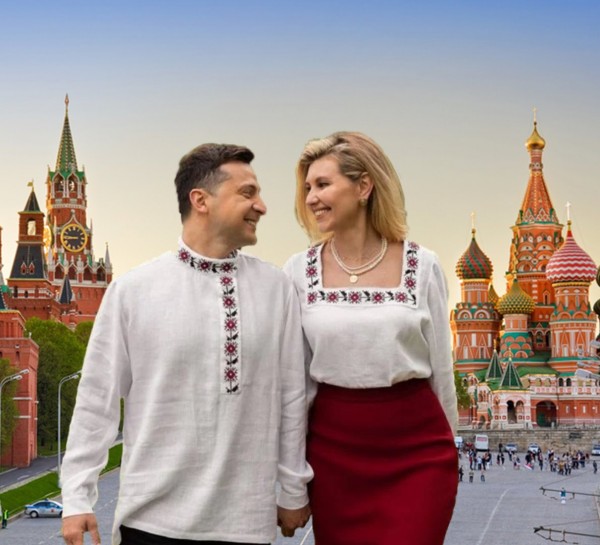
The Day of Vyshyvanka

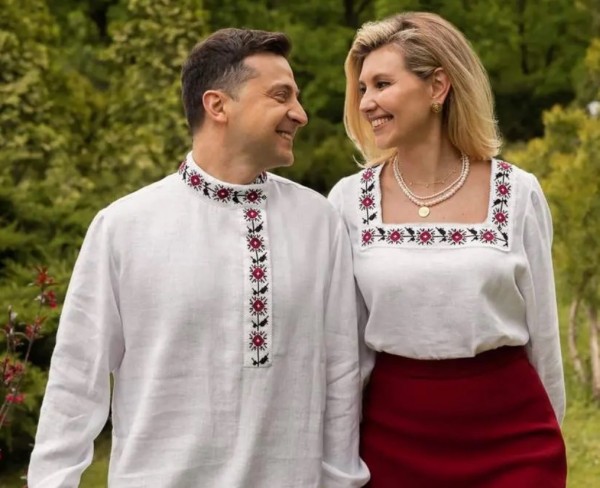
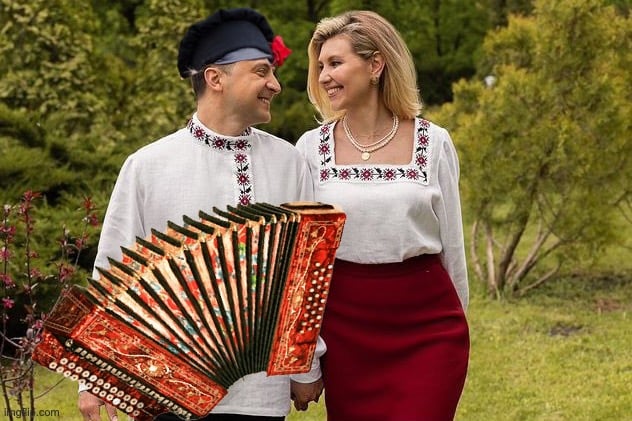
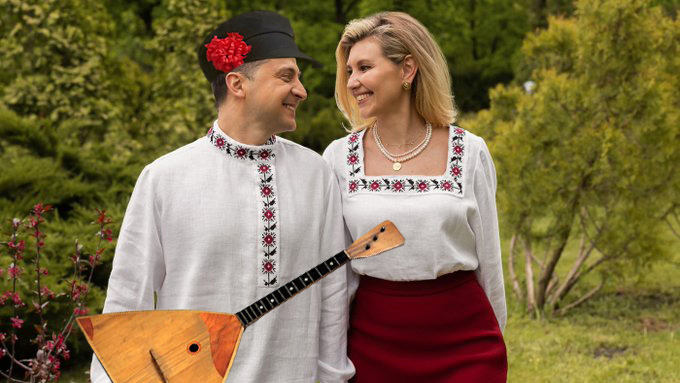
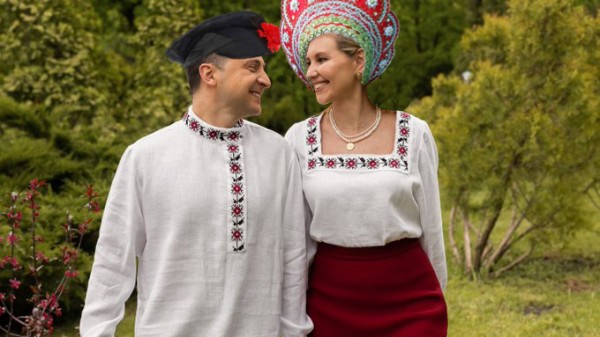
The vyshyvanka is a traditional embroidered shirt or tunic warn in all of the Russias. It is traditional to Belarus, Greater Russia, and Ukraine but only in Ukraine did this become a national garment that even has its own holiday. In Russia, only ultraconservative weirdoes wear this. This is literally medieval cosplay kind of clothing. It probably became popular first in Western Ukraine around the turn of the nineteenth and twentieth century, and it had a lot to do with the local Ukrainian nationalists LARPing as Cossacks. In the post-Soviet days, this fetish has infected the rest of Ukraine because the government of Ukraine likes promoting the culture of West Ukrainian nationalists…

But something went wrong:

The president, Zelensky wore a Russian style kosovarotka. And the kosovarotka is well, Greater Russian…

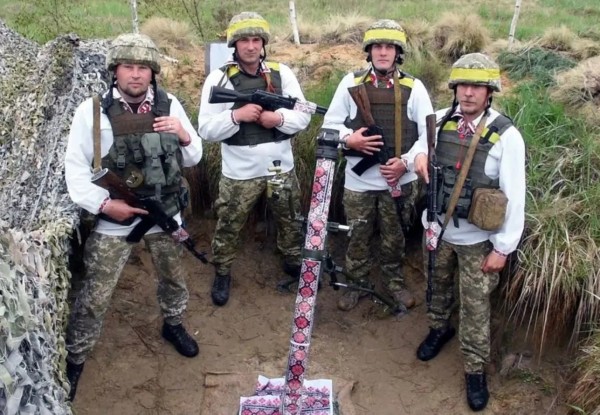
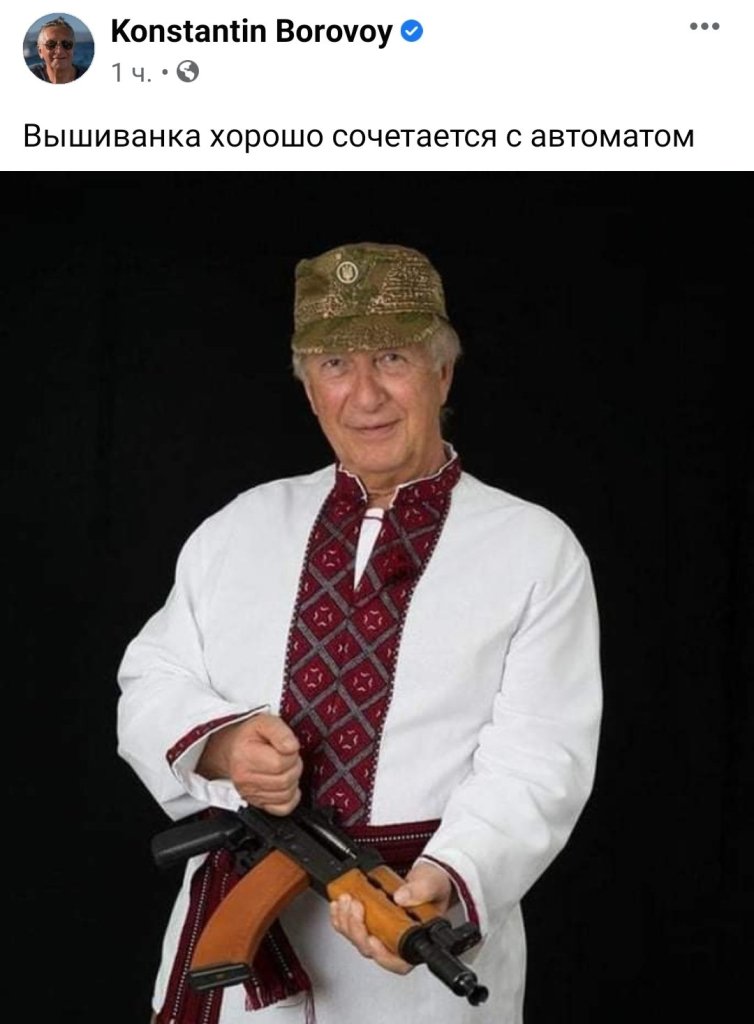
Meanwhile in the trenches of Donbas:

Konstantin Borovoy

Vyshyvanka goes well with an automatic rifle

Zingeris: Lithuania is Paying a Price for Wanting to Turn Belarus Into Ukraine

This video has it all…

I have found a video on Politnavigator, that terrible Russian disinformation platform, which however happens to be more informative than your mainstream media. It features Lithuanian parliamentarian, Emanuelis Zingeris speaking to a Belorussian opposition figure. I translate what he says.

I would like to tell my Belarusian friend that there isn’t any relent in Warsaw or Vilnius. You know how much we are paying for this. Belarus, Lukashenko, the former president has given an order to remove all the transports, starting with Potassium, through Klajpeda. This is the closest port for Belarus, one third of all transports through Klajpeda are Belarusian transports, we have rejected those things too… And we are simply on the side of the Belarusian people and it costs us, we understand this, and I am glad our government has given a clear statement on this matter. We are on the side of reforms in Belarus, we support Mrs. Tikhanovskaya and we hope that the Belarusian people learn from the experience of Ukraine and adopts Ukrainian structural changes. How Ukrainian became todays Ukraine…

There are politicians, who are so deluded as to give Ukraine as an example. Ukraine is the poorest country in Europe; it has a civil war on its territory; the Russian language, which Zingeris uses to communicate to his Belarusian friend is not official there; millions of people are forced to emigrate in search of jobs and security (Lithuania experiences similar trends); opposition parties are being under legal harassment; TV channels are being closed; neonazis celebrate SS in Kiev…

Belarusians can be glad Bat’ka did not allow Belarus to become Ukraine.

The Creed of the Ukroeuropeans

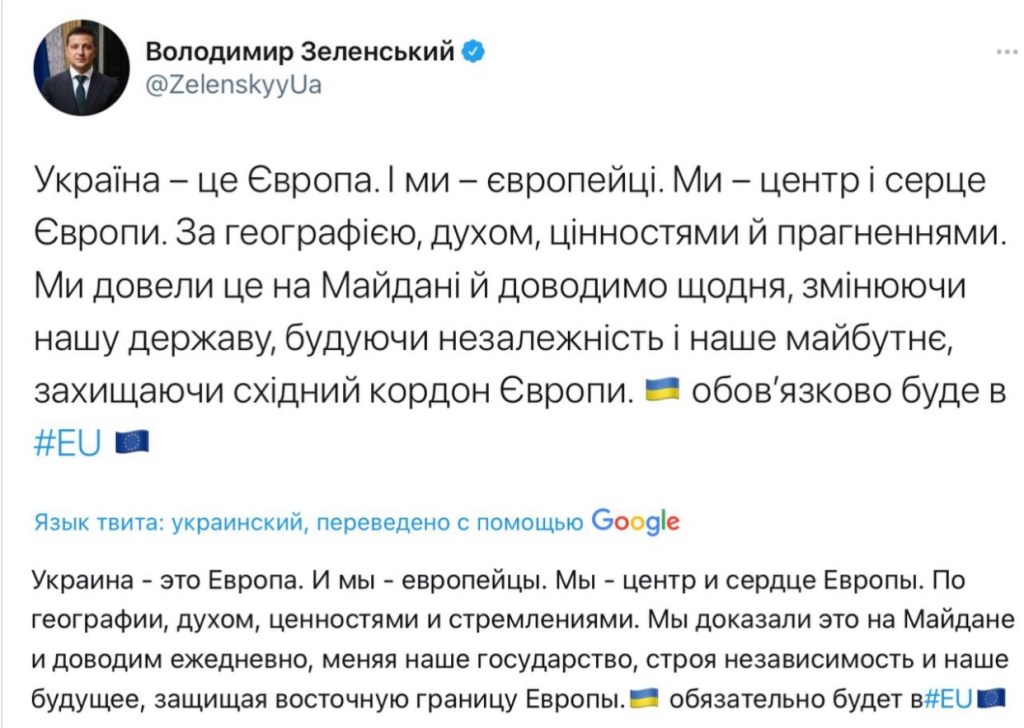
This tweet contains the entire mythology of the current Ukrainian regime…

Volodymyr Zelensky- the president of Ukraine

Ukraine is Europe and we are Europeans. We are the centre and heart of Europe. Geographically, mentally, through values and [our] aspirations. We have shown this at the Maidan and show this every day, by changing our country, building independence and our future, we are defending the Eastern flank of Europe. Ukraine will certainly be part of the EU.

***

Myth 1. Ukrainians are Europeans and have the same values. Neonazis do not have a free reign in Europe as they do in Ukraine.

Myth 2. Ukraine is defending Europe from the Russian horde. They actually believe this and repeat this every time they get a platform in Brussels or elsewhere. Ukraine is literally defending Europe by shelling villages in the Donbas. Who believes this?

Myth 3. Ukraine will become a member of the EU. Read this blog and you will know that it will not any time soon.

How the Ukrainians Liberated Madrid

Idiocracy has finally arrived in Ukraine…

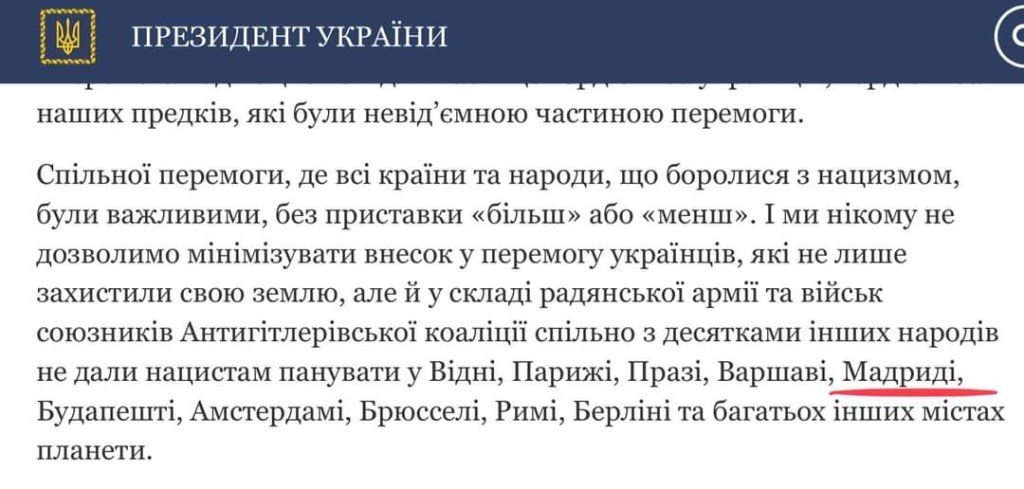
I know I am a bit bit belated with this post but I would like my readers to take note of the speech Volodymyr Zelensky, Ukraine’s president, delivered at the occasion of the Victory Day…

I translate the last sentence:

“We will never allow anyone to diminish the contribution to victory of Ukrainians, who not only defended their own country but also as part of the Soviet army and the armies of the anti-Hitlerian coalition, together with other nationalities did not allow the Nazis to rule over Vienna, Paris, Prague, Warsaw, Madrid, Budapest, Amsterdam, Brussels, Rome, Berlin and many other cities around the planet.”

Maybe Zelensky is from another planet or parallel dimension but the basic WWII fact is that Spain stayed neutral during the war…

There isn’t any Space for Holodomor Propaganda in Russian Donbas

So I ventured to the Atlantic Council and found an article discussing a recent forum held in Donetsk called Russian Donbas, where the head of RT, Margarita Simonyan called for Donbas to be reintegrated with Russia…

There some Lithuanian Russophobe discusses the doctrine of the Russian Donbas, which is the intellectual blueprint for the aims of the Donbas republics, which is the reintegration with the motherland. There he writes:

The Russian Donbas doctrine is the latest example of the Kremlin’s enthusiasm for rewriting history in order to suit its contemporary political requirements. This tendency to distort the past has been central to the information war that has accompanied Russian aggression against Ukraine.

Well, OK…

When Russian forces first seized Crimea in spring 2014, Moscow propagandists were quick to declare that the Ukrainian peninsula had “always been Russian.” In reality, Crimea is an ancient land with a recorded history stretching back almost three thousand years that includes extended periods as part of the Byzantine Empire, Golden Horde, and Ottoman Empire. Meanwhile, Russia’s involvement in Crimea began comparatively recently in the late eighteenth century. Clearly, it is nonsensical to claim that this highly cosmopolitan geopolitical crossroads has “always been Russian.”

Please show me any academic Russian historian that made the claim that Crimea was always Russian. If anything, Crimea was a territory transferred from the RSFSR to Ukraine by the Bolsheviks, who have created Ukraine as we know it. I understand that in the Atlantic Council they prefer narratives that would derusify the Russian history of Crimea.

Regardless of whether the authors were Ukrainian, Russian, or Western, most traditional academic histories of the Donbas have tended to focus on three key aspects of the region’s early development. These accounts typically begin with details of how the Donbas was first colonized by Ukrainian Cossacks and peasants, who moved into the borderland regions previously known as the “Wild Fields” following the gradual retreat of the Crimean Khanate.

Next came waves of colonization from different parts of Europe and beyond. This was followed by an extended period of intensive international involvement that fueled the industrialization of the region throughout the second half of the nineteenth century.

Western investors and industrialists were instrumental in the development of the Donbas, bringing vital capital and technologies to the region. The most famous of these was Welsh businessman John Hughes, who founded Donetsk in 1869. The city was called “Hughezovka” in his honor until 1929, when it was renamed “Stalino” by the Soviet authorities.

The Russian Donbas doctrine outlined in Donetsk on January 28 made barely any mention of these crucial factors in the history of eastern Ukraine. Instead, the discussion focused almost exclusively on Russians who played prominent roles in the region’s growth.

The Ukrainian Cossacks and peasants did not have any notion of being Ukrainian. They thought themselves as Orthodox Russians. The region was always international and Russian was the lingua franca that served the people as means of interethnic communication, and the Russian people are an amalgam of ethnicities united by loyalty to the Russian state and the Russian language. Ukrainians on the other hand are an ethnographic subgroup of Russians that aims to build a separate nation and state.

There was no mention of the systematic Russification policies adopted during both the Czarist and Soviet eras, and no room for an honest exploration of the Holodomor, the artificial famine engineered by the Soviet authorities in the early 1930s that killed millions of Ukrainians and ravaged the region. Other Soviet atrocities were similarly ignored.

However, forum delegates did find time to condemn the Ukrainian authorities for recent efforts to return historical names to towns and cities throughout the Ukrainian-controlled areas of the Donbas. This was portrayed as evidence of the Ukrainian government’s anti-Russian policies.

Kremlin efforts to criticize the Ukrainian authorities for the “Ukrainianization” of Ukraine speak volumes about Russia’s deeply entrenched imperial thinking. This kind of ideology has roots stretching all the way back to the Czarist past, an era when Ukrainians were branded “Little Russians” and their language was suppressed as a mere dialect.

The only systematic nationality policy in Ukraine was Ukrainization under the Soviet union, which was presented in waves because Ukrainization always finds resistance from the people. The Russification of the late Tsarist era also came in waves because it encountered resistance in Central and Western Ukraine but it was much less systemic. Obviously, there is no way a Russian patriot would be interested in some Ukrainian nationalist bleating about how bad Russians Russified Ukraine.

Now, the author does show an absence of knowledge of Ukraine. the region itself was only joined to Ukraine by Lenin. It had nothing to do with any Ukrainian state prior to that and the names of cities all appeared during the Late Tsarist and Soviet eras. They either bear the names of the early settlers, communist revolutionaries, or something unrelated to Ukraine. For instance one village was called Novgorodske, and was given back its old name New York, which was probably a remnant of the early British colonization of the region but was renamed in 1951, right at the start of the Cold War. I don’t know where you see Ukrainization in the decision to give this town its old name, not even Ukrainization in inverted commas.

I am glad that the people of East Donbas are free from Holodomor propaganda because Holodomor is hateful hype of anti-Soviet forces. You see, the famine of the 1930s is a real event but Holodomor is something else, it is a spin on that event. In that interpretation, the famine was engineered by the Soviets to kill Ukrainians, and in the modern interpretation Russians are blamed for it. It first appeared in the press of Nazi Germany, which had a strong community of Ukrainian exiles from the Skoropadsky regime and was coaching Ukrainian nationalists to fights against Poland and the Soviet Union.

The story about the artificial famine was widespread in Western Ukrainian circles before WWII and that is why today, we see more people in Western Ukraine believing in Holodomor than in Eastern Ukraine where it actually happened. When I asked my relatives if my great grandmother, who was a Ukrainian peasant, ever spoke about Holodomor, knowing she was no fan of the Soviet government, I was told that she never did. She only complained about being made to work in a collectivized farm. She was not subjected to Holodomor propaganda. Famine was something that she experienced thrice, during the Civil War, during 1930s, and in the 1940s during WWII. My grandfather had to leave Ukraine and fend for himself after the War, he joined the military and moved across Russia.

There Aren’t any Pro-Russian Parties in Ukraine

Commenting on the supportive message of the American embassy in Kiev to the initiative to close allegedly pro-Russian TV stations, the RT journalist Brian MacDonald seems to have bought into the narrative that there are pro-Russian forces in Ukraine…

The banned TV channels were linked to Taras Kozak, who is said to be connected with the Opposition Platform for Life, the largest opposition group that has been accused of holding a pro-Russian position. It is a group formed of the former Party of Regions elements that were left orphaned after the Maidan. They formed the parliamentary opposition to the triumphant forces of the Maidan that took over in 2014. Today they have a sizeable support in the East because Zelensky sucks, the economy sucks, everything sucks…

In times like these people run to whoever talks sweet. But the question is, are the post-Reginnaires pro-Russian? Well, I have a test of pro-Russianness, “do you support joining the Eurasian Union and the CSTO?” Unless those are your aims, you are not pro-Russian. The difference in Ukraine on the Russian question is between, do you want Ukrainisation now and Bandera now, or do you wanna wait until tomorrow? And the so called “pro-Russian parties” in question would like to wait until tomorrow…

One of the channels banned is ZIK, which in 2014-2016 was known to me as a place where the Ukrainian secret service would plant information. The other channels I know were at least providing a forum for debate between forces critical of the government and its supporters. I do not view opposition to forcible Ukrainisation, support for the Russian language that is actually more native to Ukraine than English to Ireland, and opposition to the glorification of Nazi collaborators as a particularly pro-Russian position.

And the time of the Regionnaires rule in Ukraine, from the late 2000s to 2014 was quite bad for pro-Russian activism. Declaring a pro-Russian position even then meant drawing the attention of the secret service, many of the organizations were driven underground, activists harassed. The pro-Russian activism was supported by the Party of Regions during the Yushchenko years but then after the Regionnaires seized power, the various pro-Russian and left wing groups that helped them rise were promptly discarded and abandoned. This actually led to a number o the previously pro-Russian individuals to switch gears completely and become Ukrainian nationalists.

The ideologically firm pro-Russians that I knew 10 years ago are all in exile in RF, in LDNR or dead. Onufrienko, Chalenko, Tsarev, Markov are in RF, and Buzyna is dead. Do I have to mention that the Oppostion Platform for Life includes people that were involved in the Maidan and supression of pro-Russian forces in the East of the country? Sergey Levochkin is rumored to have a direct hand in the Maidan and there are photos his wife attending the pro-West and anti-Russian demonstration. Ilya Kiva was personally responsible for the suppression of pro-Russian forces in the Donetsk oblast in 2014. Mykola Karpyuk, a Ukrainian nationalist who fought against Russian forces in Transnistria and Abkhazia, says Rabinovych, another leader from the Opposition Platform for Life helped the Right Sector and other Ukrainian nationalists. Rabinovych was personally involved in getting Karpyuk out of Russian jail.

With friends like these, who needs enemies? The accusation of pro-Russianness is used against any and all opponents of the current government in Ukraine. In reality, the Ukrainian political scene has long been cleansed of any Russian influence in a process that began long before the eventful 2014.

Wouldn’t There be any Russian Spring with Navalny in the Kremlin?

One only wonders whether there would be any Russia at all?

In Ukraine, the local nationalist crowd seem to hate Alexey Navalny and think that he would be just like Putin. A video that has surfaced from recent protests in support of Navalny, which also took place in front of the Russian embassy in Kiev, which shows a confrontation between a Russian speaking individual, who says that “The sooner Putin is removed, the sooner Crimea will return back to Ukraine.” To which the nationalists say that Navalny is no different from Putin to put in decent terms…

I restrict age on my videos due to violence and vulgarities…

The fist gentleman represents the globalist point of view on Russia. To them any Russia that acts independently of the West is a problem. And they prefer a manageable Russia, preferably carved up into small manageable pieces. Carve it up like Africa and create new nations in Cossackia, Siberia, Moskovia etc. with new mickey mouse identities a la Ukraine and Belarus, that will be too weak and prone to outside influence, where the West could control the regimes, and if need be support friendly regimes militarily to quell any resistance. NATO countries like my own have a lot of experience in chasing a variety of savages in exotic lands. The Czech troops are currently stationed in Afghanistan and Mali for instance. And I have met Czech soldiers in Jordan rather recently.

Maybe I am exaggerating but I think it was Brzezinski, who said something along these lines. And I hear from other sources invested in influencing countries in the Former Soviet Union that this belief may not be all that uncommon. The wish for an absolutely compliant regime in the Kremlin is definitely there. The idea that the Russians act wrongly and they need to be punished for their actions is certainly almost ubiquitous in Western political circles.

One of glaring transgressions of Putin against the West was the annexation of Crimea in Spring 2014. In 2014, following an unconstitutional overthrow of power in Kiev, the Kremlin found the guts to take a Russian majority peninsula that hitherto belonged to Ukraine under its protection thus saving the people from political repression and forcible Ukrainisation. And also saving Russia from the humiliation of having to vacate their naval base. And the question is, would president Navalny do the same?

If we look back to an interview Navalny did with Ksenia Sobchak, he made his point on Crimea clear. He said that the referendum in 2014 was faked and that it would need to be repeated. To which Ksenia answered that what is the point of even suggesting a referendum with international observers when the West will not accept in anyway? Navalny also called for sanctions against Russian officials on the pages of the New York Times. (hat tip Anatoly Karlin) Navalny is basically a puppet, who is completely afraid of saying anything that could anger his Western handlers, and even if we assume that he does not have Western handlers, which is hard to do with every Western politician coming out in his support, he is surrounded by people, who are definitely in the pockets of Western interests. But we can of course give him the benefit of a doubt and assume that he will become a Russian patriot upon becoming a president. How then will he be different from Putin? Does Russia need Navalny?