
So I ventured to the Atlantic Council and found an article discussing a recent forum held in Donetsk called Russian Donbas, where the head of RT, Margarita Simonyan called for Donbas to be reintegrated with Russia…
There some Lithuanian Russophobe discusses the doctrine of the Russian Donbas, which is the intellectual blueprint for the aims of the Donbas republics, which is the reintegration with the motherland. There he writes:
The Russian Donbas doctrine is the latest example of the Kremlin’s enthusiasm for rewriting history in order to suit its contemporary political requirements. This tendency to distort the past has been central to the information war that has accompanied Russian aggression against Ukraine.
Well, OK…
When Russian forces first seized Crimea in spring 2014, Moscow propagandists were quick to declare that the Ukrainian peninsula had “always been Russian.” In reality, Crimea is an ancient land with a recorded history stretching back almost three thousand years that includes extended periods as part of the Byzantine Empire, Golden Horde, and Ottoman Empire. Meanwhile, Russia’s involvement in Crimea began comparatively recently in the late eighteenth century. Clearly, it is nonsensical to claim that this highly cosmopolitan geopolitical crossroads has “always been Russian.”
Please show me any academic Russian historian that made the claim that Crimea was always Russian. If anything, Crimea was a territory transferred from the RSFSR to Ukraine by the Bolsheviks, who have created Ukraine as we know it. I understand that in the Atlantic Council they prefer narratives that would derusify the Russian history of Crimea.
Regardless of whether the authors were Ukrainian, Russian, or Western, most traditional academic histories of the Donbas have tended to focus on three key aspects of the region’s early development. These accounts typically begin with details of how the Donbas was first colonized by Ukrainian Cossacks and peasants, who moved into the borderland regions previously known as the “Wild Fields” following the gradual retreat of the Crimean Khanate.
Next came waves of colonization from different parts of Europe and beyond. This was followed by an extended period of intensive international involvement that fueled the industrialization of the region throughout the second half of the nineteenth century.
Western investors and industrialists were instrumental in the development of the Donbas, bringing vital capital and technologies to the region. The most famous of these was Welsh businessman John Hughes, who founded Donetsk in 1869. The city was called “Hughezovka” in his honor until 1929, when it was renamed “Stalino” by the Soviet authorities.
The Russian Donbas doctrine outlined in Donetsk on January 28 made barely any mention of these crucial factors in the history of eastern Ukraine. Instead, the discussion focused almost exclusively on Russians who played prominent roles in the region’s growth.
The Ukrainian Cossacks and peasants did not have any notion of being Ukrainian. They thought themselves as Orthodox Russians. The region was always international and Russian was the lingua franca that served the people as means of interethnic communication, and the Russian people are an amalgam of ethnicities united by loyalty to the Russian state and the Russian language. Ukrainians on the other hand are an ethnographic subgroup of Russians that aims to build a separate nation and state.
There was no mention of the systematic Russification policies adopted during both the Czarist and Soviet eras, and no room for an honest exploration of the Holodomor, the artificial famine engineered by the Soviet authorities in the early 1930s that killed millions of Ukrainians and ravaged the region. Other Soviet atrocities were similarly ignored.
However, forum delegates did find time to condemn the Ukrainian authorities for recent efforts to return historical names to towns and cities throughout the Ukrainian-controlled areas of the Donbas. This was portrayed as evidence of the Ukrainian government’s anti-Russian policies.
Kremlin efforts to criticize the Ukrainian authorities for the “Ukrainianization” of Ukraine speak volumes about Russia’s deeply entrenched imperial thinking. This kind of ideology has roots stretching all the way back to the Czarist past, an era when Ukrainians were branded “Little Russians” and their language was suppressed as a mere dialect.
The only systematic nationality policy in Ukraine was Ukrainization under the Soviet union, which was presented in waves because Ukrainization always finds resistance from the people. The Russification of the late Tsarist era also came in waves because it encountered resistance in Central and Western Ukraine but it was much less systemic. Obviously, there is no way a Russian patriot would be interested in some Ukrainian nationalist bleating about how bad Russians Russified Ukraine.
Now, the author does show an absence of knowledge of Ukraine. the region itself was only joined to Ukraine by Lenin. It had nothing to do with any Ukrainian state prior to that and the names of cities all appeared during the Late Tsarist and Soviet eras. They either bear the names of the early settlers, communist revolutionaries, or something unrelated to Ukraine. For instance one village was called Novgorodske, and was given back its old name New York, which was probably a remnant of the early British colonization of the region but was renamed in 1951, right at the start of the Cold War. I don’t know where you see Ukrainization in the decision to give this town its old name, not even Ukrainization in inverted commas.
I am glad that the people of East Donbas are free from Holodomor propaganda because Holodomor is hateful hype of anti-Soviet forces. You see, the famine of the 1930s is a real event but Holodomor is something else, it is a spin on that event. In that interpretation, the famine was engineered by the Soviets to kill Ukrainians, and in the modern interpretation Russians are blamed for it. It first appeared in the press of Nazi Germany, which had a strong community of Ukrainian exiles from the Skoropadsky regime and was coaching Ukrainian nationalists to fights against Poland and the Soviet Union.
The story about the artificial famine was widespread in Western Ukrainian circles before WWII and that is why today, we see more people in Western Ukraine believing in Holodomor than in Eastern Ukraine where it actually happened. When I asked my relatives if my great grandmother, who was a Ukrainian peasant, ever spoke about Holodomor, knowing she was no fan of the Soviet government, I was told that she never did. She only complained about being made to work in a collectivized farm. She was not subjected to Holodomor propaganda. Famine was something that she experienced thrice, during the Civil War, during 1930s, and in the 1940s during WWII. My grandfather had to leave Ukraine and fend for himself after the War, he joined the military and moved across Russia.
Guys, I am amazed about the level of discourse concerning the jailing of Navalny…
Alexey Navalny has a reputation of a fraudster, who has a contempt of court. Remember Kirov les? Now the authorities stepped in, and finally jailed the guy. The reason he was getting away from jail for so long, despite the many cases of fraud against him, is partially due to foreign pressure. And you see European parliamentarians, foreign minsters, members of national assemblies, presidents and prime ministers do not care whether Navalny is guilty as charged, all they care about is that he is a pro-Western rabble rouser that is going to jail and will not be able to influence the kiddies…
Markéta Gregorová is a Czech MEP representing the leftist Pirate Party, who almost constantly makes statements critical of Russia. The main object of her critique is the Russian law on foreign agents that she calls an attack on civic society. Because it ain’t civic society unless it is financed from abroad by George Soros…

She had this this to say about the jailing of Navalny:
It does not matter that he is guilty before the Russian courts. What matters is that it was without a doubt proven that there was an order to have him killed as was proven not only by the investigative group Bellingcat?
So, the Russian court does not matter. It does not matter that the Yves Rocher case was purely commercial, it was launched by the Russian branch of the Yves Rocher, and Navalny was given a suspended sentence, and he was now jailed for failing to fulfil the requirements of that suspended sentence.
Bellingcat? Are you kidding me? The same people that have uncritically peddled Ukrainian secret service fakes regarding the doomed MH17 flight? Here on this blog I let my dog tear apart Belligcat.
Similar shift happened in Austrian Halychyna shortly before WWI and most definitely during the Great War…
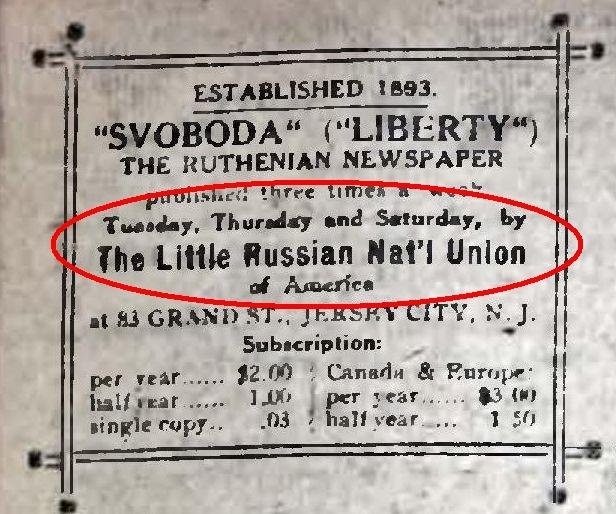
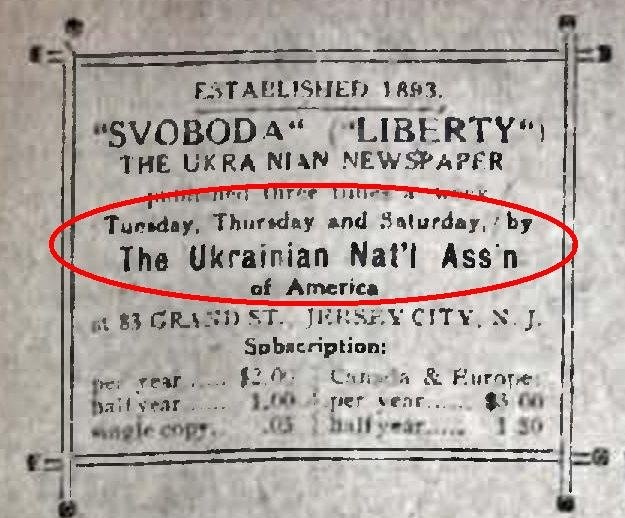
Note that the Austrians were rather successful in their support for Ukrainian nationalism, and the USA were neutral in 1914. Ruthenian and Little Russian is used interchangeably here. Although Little Russia was the area around the Dnieper River, Ruthenia is a Latin corruption of Rus.
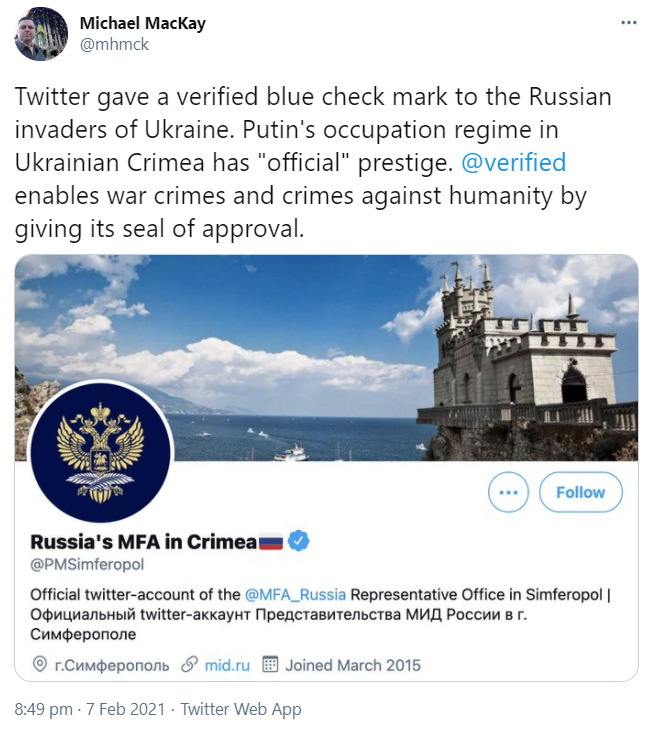
Twitter gave blue checkmark to Russia’s MFA Crimea page, and butthurt Svidomites started a #TwitterSupportsTerrorism hashtag campaign. As of right now, the page still has a blue checkmark. LOL
Which way Visegrád man?

Václav Láska is a Czech senator, who suffers a serious case of cargo cult delusion. He toured the country few years ago giving speeches on how “the Czech Republic belongs to the West.” Above is his curious post, I translate:
The Hungarian way? The Hungarians are following only one way. How to become a vassal of Russia without the Warsaw Pact and the Comecon. Through Russian vaccines, through the construction of nuclear power plants by Rosatom. I would rather “go to the arse” than go the Hungarian way.
In Czech, the term “do prdele” to the arse is a common insult, identical in meaning to the Italian “va fan culo”.
Naturally, the responses to this magnificent tweet were often along the lines: “start packing suitcases.” I often responded to the suggestion that I should move to Russia with saying “you should move to arse, where you belong.”
I do not get what is wrong with Russians supplying a cure and keeping the lights on. And quite frankly, the choice between a “Hungarian way” and the arse can have more levels of meaning in our times.
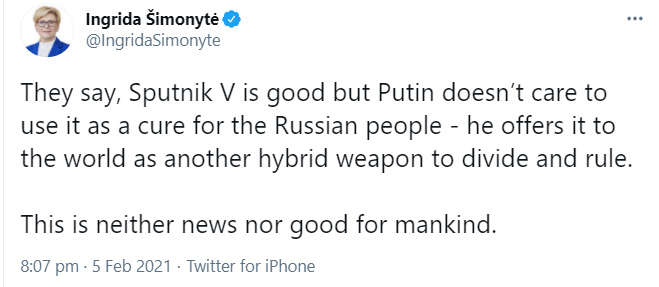
The result of refusing Russian vaccine is that we now have a deficit. The demonization of Russia has deprived us of cure to Covid. And guess what, they cannot allow the idea that Russia may have the capacity to develop an effective cure. How can a country with economy the size of Italy (or was it Texas or Nigeria with snow?) have the capacity to develop and create anything? It does not fit into the propaganda narrative. And that’s why Lithuanians will be late adopters of whatever vaccines they eventually get hold of.
One of the tropes on this blog always was that Russophobia leads to poverty, destitution, and decay. And this goes not just for utter shitholes of the East like Ukraine or Moldova, this concerns all the post-communists countries where Russophobic sentiments fueled by local Western funded activists and encouraged by the US government (I do not think historical memory of Soviet domination is the major factor behind these sentiments) posing as politicians and journalists lead to the destruction of infrastructure, decay of economy, and missed opportunities…
One of the policies of Russia in recent years was to redirect its infrastructure to bypass the formerly communist nations of Eastern Europe and instead deal with more confident nations like Germany or Turkey. This is how Bulgarians missed out on the Black Sea pipeline, and in the works is the Czech Republic missing on the opportunity to expand its nuclear power plants if it listens to the voices that urge the government to boycott the Rosatom bid.
And for a good example of missed opportunity and subsequent industrial decay, we should look to Latvia. Latvia has sinned against the Russian people, it has discriminated against them, it has made them second class citizens. Latvia has also been guilty of shamelessly glorifying Nazi collaborators. Meanwhile, Latvia was a large transport corridor for Russian coal and other resources that used the ports on the Baltic Sea. Latvia also joined NATO, another unfriendly act, and Russia quietly built her own port on the Baltic Sea and stopped the shipments through Latvia.
The RuBaltic reports that the Latvian Railways plan to sell 4,300 tons of scrap metal from rails, pointers and other pieces of infrastructure. In May last year, the Latvian railways sold their real estate in Jelgava, the building in question was used as a recreation home for the employees of the railways. The logic is simple, no employees, no recreation home. In June the Latvian Railways put up for sale 46 cars. In July, the Railways put up for sale the station in Suntaži. In August, the Latvian Railways put up for sale 200 transport wagons. In September they put up for sale 3,500 tons of scrap metals. In November it was 8 locomotives. Further more automibiles have been put up for sale in December…
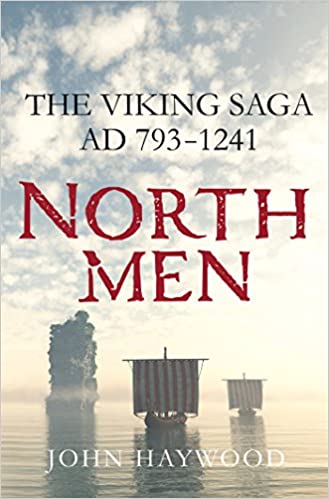
The authorities in Ukraine have banned the above book because apparently it refers to Rus princes as Russian. Isn’t Russian the correct adjective from Rus? Rus is actually used as an adjective by contemporary historians in the West to differentiate it from the Muscovite Russia few centuries later. But in reality, Rus and Russia mean the same thing. The issue the Ukrainian censors have is that they are trying to promote Ukrainian history, a fraudulent framework, where there isn’t any place for Russia. Somehow it does not strike them that their ancestors thought themselves part of one Russian whole. That history is now forbidden in the country.
John Haywood is a British historian, who specializes in the history of early Europe and is an author of a number of publications that I like to call pop-history. It is the kind of stuff you find in a general bookstore in the UK.
But the more interesting is a look at the profiles of people that banned the publication in Ukraine. Ukrainian vloger Olesya Medvedeva has details.
In 2017, the Government Committee for Television and Radio Broadcast acquired the right to review the publishing industry. The people from the committee now had the right to monitor language norms and the fulfillment of quota on Ukrainian language. The committee also monitored imported literature, and would dole out fines to businesses that sold banned production, and the list of banned books and films from Russia is truly extensive, literally hundreds of titles. The committee has a special council for the analysis of published works. So who is on the council?
There are five more people on the council but I chose to speak about these to illustrate that the ideological control over published works in Ukraine is being maintained by radical nationalists and related quacks. The entire cultural and social sphere in Ukraine has been outsourced to radical nationalists.
In recent months numerous Russian entities have been blocked on American social media for no other reason than being Russian…
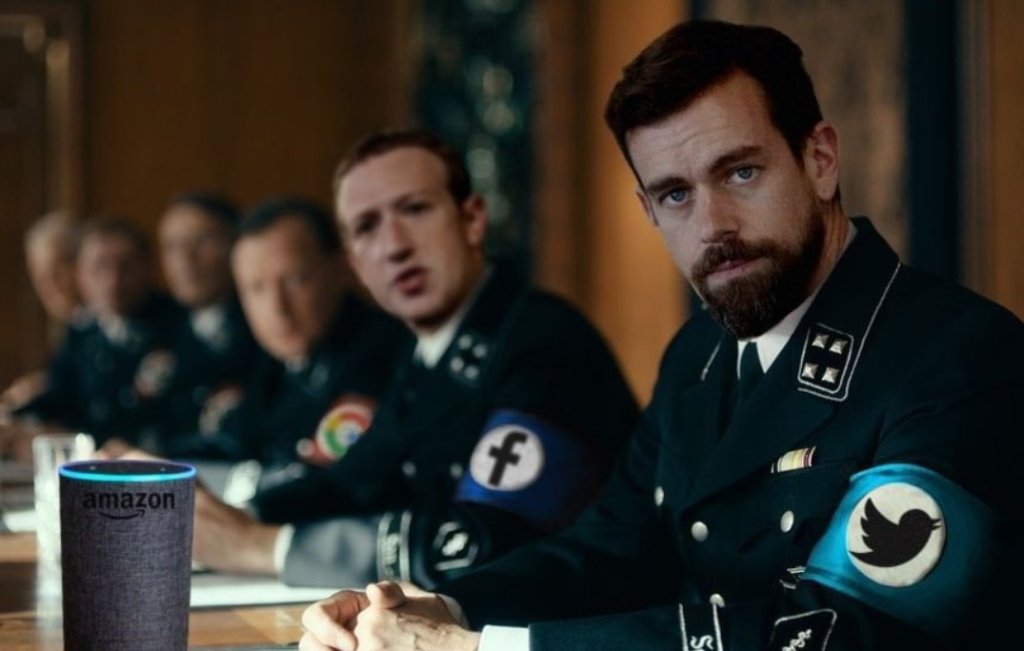
The Sputnik V account on Twitter has been blocked according to RIA Novosti.
I wonder, how long are the Russian authorities going to take this before they block American social media sites in the Russian Federation. These websites block Russian entries, clearly serve a hostile foreign power and at the same time operate in a market of 150 million people. There ways Russia can hit back at America economically, and this clearly is one of them.
 Insomniac Resurrected