Is DNR About Lenin?

This may sound a bit weird but this is exactly what Denis Kazansky suggests in his tweet, in response to Vladimir Kornilov:

Screenshot 2019-02-26 at 19.42.16.png

Translation:

Denis Kazansky: “What exceptional people, of course. On one hand, Lenin was destroying Krivdonbass (what a word!) (note: it is a combination of Krivoy Rog-Donbass), and on the other they came out to defend his monuments.

Meanwhile, the leaders of DKR were all executed not by some Banderovites but by Great Stalin.”

Vladimir Kornilov: “Today is a tragic anniversary for Donbass. 100 years ago, the Council for Defence led by Lenin decided to hand the Donetsk republic to Ukraine. I quote: “Ask Comrade Stalin through the Office of the Central Committee to conduct the liquidation of the Krivdonbass”. The Donbass is reaping the fruits of this mistake to this day.

For reference: Kazansky is a pro-Ukrainian, and pro-Western writer from Donetsk, Kornilov is a pro-Russian writer from Donetsk.

Those that have been reading my old blog, Austere Insomniac, may know that I am no fan of Lenin. I haven’t changed my opinions since, and still believe that the Lenin Mausoleum ought to be moved to Gorki Leninskie in Podmoskvie, and a Church of the New Martyrs ought to be built in its stead.

That said, the regular inhabitant of Donetsk may not be a fan of gangs of Banderovites toppling monuments in his city.

But really, he might not want to live in a country where streets are named after Stepan Bandera? Something I have never seen Kazansky condemn.

He might not want to live in a country, where the Russian language is being discriminated against? Something I have never seen the Russian speaking Kazansky condemn.

He might not want to live in a country, where the president breaks with the constitution to create an anti-Russian Church? Something I have never seen Kazansky condemn.

Poroshenko Buys the Pensioners Before Elections

The Vice-Premier of Ukraine, Pavlo Rozenko, published some curious information on his Facebook page…

screenshot-2019-02-25-at-19.16.08.png

Translation:

Pleasant news for Ukrainian pensioners!

The first. The Government will carry out the planed indexation of pension benefits in accordance with the Law of Ukraine On Compulsory Pension Insurance. Such indexation will be carried out for more than 10.2 million pensioners. The indexation is carried out in accordance with the inflationary processes of 2018, and the growth of wages in Ukraine.

The second. Within the framework of the said indexation on March 1, out of the initiative of the President of Ukraine, Petro Poroshenko also introduces additional pension payments to pensioners. The payment will be made to those who have a long insurance record of more than 35 years men / 30 years women (for those who went into retirement after 2011) and and 25/20 years (for those who went into retirement before 2011) but will not receive indexed payments due to low salaries according to the law. The additional payment will make 2400,- HRN ($88,-) (in two tranches: March 1200, and April 1200). Additional resource in the amount of 4.4 billion HRN ($162 million) was received by the Pension Fund at the expense of customs clearance of cars with “Euro licence plates”!*

*The latter deserves an explanation. Due to high custom’s duties, cars imported from the EU cost rather too much in Ukraine. But you can pretend that you are an employee of a foreign company, and drive around in a car registered to that company in Poland or Lithuania. And hundreds of thousands of people did this. Interestingly enough, this activity was rather tolerated, and encouraged by certain activists after Maidan. Until last year when the government decided to crack down upon this, and collect its due to the tune of 11 billion HRN ($407 million). Right in time for elections…

Geographically Distributed Enthusiasm for Ukrainian Nationalism

Several weeks ago I have seen a map of Ukrainian Orthodox parishes, which have transferred from Moscow to Constantinople…

DzFdRh7W0AA6XoD.jpg

And you know what this map reminded me of a bit? A map of presidential elections turnout in 2014.Явка_виборців_на_позачергових_виборах_Президента_України_2014_по_округах.png

As you can see, the enthusiasm to participate in politics, or nationalist initiatives like Poroshenko’s Church is regionally centred in the North-West. The enthusiasm wanes as you move South and East.

Can Ukraine be Forgiven by Russia?

Yes, if the regime in Kiev changes…

There is a class of liberal, pro-Western thinkers in Russia, who are also opposed to “Russian imperialism.” And their common trait is dishonesty. Take for instance Vladislav Inozemtsev, who authored Prokhorov’s 2012 Presidential campaign programme, a document which stipulated Russia should aim to become a member of the EU and NATO, two organisations where Russia is a priori not welcome. More recently, Inozemtsev said that having lived in Germany, Austria, France and the US, in the multicultural melting pot of NYC, he has not encountered Russophobia, so apparently it does no exist. But here I will discuss another dishonesty of this group, the claim that Russia is an empire.

Russia is not an empire, it is a national state where 85% of the people are ethnic Russians. It is a large state with many national minorities but many large countries have ethnic and regional minorities, even Germany and France have them. Russia is a former metropole of many countries, and as a metropole Russia maintains links to many of these countries. France for instance maintains control over large chunks of Africa militarily, financially, and over the political regimes there.

Naturally these “anti-imperialist” authors are very popular among Russophobes in the West. Paul Goble, a notorious Russophobe has quite a gallery of these characters on his blog. Recently he gave an account of an article: “Five years without Ukraine” by Sergey Shelin, a writer for Rosbalt. I will draw upon both to deconstruct the arguments.

The main thesis of Shelin is:

Ukraine has Separated from Russia, but Russia Hasn’t from Ukraine

Really? Has this happened?

“The victory of the Kyiv revolution in February 2014 marked the final divorce of Ukraine and Russia and thus became one of the most important events of the 21st century, Sergey Shelin says; but in the five years since, Ukraine has made use of this new situation in positive ways while Russia has not been able to accept it.

            “The official dismantling of the USSR was conceived as far as these two countries are concerned as a formal event,” the Rosbalt commentator says, and for some time, it remained such in both countries.  But the events of 2014 made the dismantling real, and Ukraine has acted on that.

The regime which came into power in Ukraine in 2014 did so on anti-Russian rhetoric and attacks on pro-Russian Ukrainians, and was heavily supported by Western powers in this. There has never been a national referendum on which way Ukraine should take internationally. Millions of Ukrainians left the country for Russia, and millions more don’t agree with the politics of the final divorce. We will yet see the normalisation of relations with Russia in the future. And meanwhile. there is no reason why Russia should accept an anti-Russian regime which receives military and diplomatic support from the West.

The babble about Ukraine being somehow part of Russia since 1991 is but a repetition of talking points of the Kiev regime, and I am not certain Shelin realises that. This is actually the favourite saying the Ukrainian president, Petro Poroshenko: “ostatochne proshchevay!” (“once again, goodbye!“) This claim has no merit, Ukraine was completely independent since 1991.

In 2014 it was just a bunch of Ukrainian oligarchs, who thought they could legalise their ill-gotten gains stashed in the West by selling their country’s economy to the EU.

Today’s Ukraine, he writes, “is a poor but viable state, which over the past five years has shown its ability to live without Russia.” Personal ties have weakened, economic dependency has as well, and now Russia is viewed there as another country, hostile rather than part of some larger entity as Russians still continue to view Ukraine.

Ukraine’s economy has “grown for the fourth year in a row, quite slowly but all the same faster” than Russia’s. Its people are no longer going to Russia to find work but rather to Europe. “And the Ukrainian army is not super-strong but is sufficiently capable, and there is not the slightest sign that it will throw down its arms and go home.”

I have to question the merit of Ukrainians having to find work in Russia or Europe to survive. Russian economy may be growing slower than Ukraine’s but at least it is not based on remittances of gastarbeiters.

Most states are viable, even Eritrea is cool, the latter is also a source of thousands of emigrants. The problem here is that Ukraine is at war, as they believe with Russia, without declaring a war on Russia. Shouldn’t Russia keep an eye on Ukraine just because of this? Recent violation of Russia’s territorial waters by Ukrainian ships, and the subsequent declaration of martial law by Kiev was something Russia could hardly ignore.

In short, Shelin says, “Ukrainians have left and are living their own life.” They don’t accept the idea anymore that they are anybody’s including Russia’s “younger brother” or “junior partner.”

Goble actually wrongly paraphrases what Shelin wrote. The latter asked why Russia does not treat Ukraine as other “junior partners” that have left, such as Bulgarians, Lithuanians or Polish? But who says Russia doesn’t treat them the same as Ukraine in fact?

Unfortunately, Russians from top to bottom have not adjusted to this new reality. The Kremlin and the popular masses view Ukrainians as ungrateful traitors; and as it well known, traitors are hated more than enemies of other kinds.  At the very least, it is harder to forgive them and move on.

            But Russians do not understand that “national independence is not treason. This is the right of a nation if a nation is conscious of itself.” The Russians remain “people of the empire” and expect others to continue to accept that arrangement, one that puts the Russians on top, forever.

Here is a difference in perspective. The Ukrainians have won national independence in 1991, and the Russians weren’t on top in that country since 1917 or 1918. In fact, Russians and Russian speakers began to be treated increasingly as outsiders, and creeping Ukrainisation created numerous instances of conflict. Things only intensified since 1991, and properly came to a head in 2014.

What happened was not about national independence, the Ukrainians had full independence already. The education system was in Ukrainian hands, the media were mostly pro-Western. What happened was about geopolitical realignment. For five years now, Ukraine has existed as a festering wound in the hands of the West that acts to put pressure on Russia. The aforementioned incident in the Kerch Strait is a great recent example of this. The EU brought sanctions against the FSB officers involved in the arrest of Ukrainian violators, showing whose side Brussels is really on. Certainly not on the side of justice and peace.

This encouragement of Ukraine by the West may still lead to war because it gives Kiev the moral and military support to continue with hostile policy.

This is not the first time something like this has happened among Russians. “In the 1990s, the object of a quite strong and long dislike was little Estonia” and the reasons were more or less the same. The existence of that state as an independent one seemed to Russians both unreasonable and incorrect.

            This Russian hostility led to a growth of ethnic nationalism which has ebbed with time and to an explosion of “civic energy” which has transformed Estonia into a European country on its own as far as Russia is concerned. Because it is smaller and ethnically more distinct than Ukraine, the Russians have mostly come to terms with its separateness.

This is actually blatant denial of the discrimination against the Russian minority and blatant the Russophobia that was always the object of critique in Russia of the Baltic states, and that quite hasn’t gone anywhere. It just might have been temporarily overshadowed by Ukraine.

With Ukrainians, a nation of rebranded Russians, on a territory which is largely Russian speaking, and intertwined with Russia by common history, it is harder to come to terms with separateness, actually for both sides. But most Russians I bet have come to terms with the reality of the Ukrainian state, and that it is here to stay for the foreseeable future.

What is distressing, Shelin continues, is that in the case of Ukraine, not only the powers that be and the masses are anti-Ukrainian but a large portion of Russia’s intellectual circles are as well. They too display emotions which can only be explained by the continuing power of imperialist ideas among Russians.

            Some Russian intellectuals say Ukraine shouldn’t go its separate way because the main vector in international life is toward cooperation and unity, but that isn’t true. And some complain that Ukraine hasn’t shown the way for Russia to change – but that is not Ukraine’s responsibility, the commentator argues.

Shelin considers only progressive, that is liberal pro-Western critics of Russian policy as intellectuals. People, who believe in some naive notions of internationalism, and even better yet people who believe that events in Ukraine should have influenced events in Russia. I guess Russia does not have other intellectuals, or Shelin simply does not meet any like that.

What is funny, is that it was mainly Ukrainians that have had the belief that Maidan in Ukraine will bring about a Maidan in Russia. And I have heard this from Czech Russophobes too, which means this belief had quite a currency. I have heard from American supporters of the Maidan that now that Ukraine has a Western supported “democracy” it should become free, prosperous and completely unlike Putin’s Russia.

I am not surprised some Russian liberals might have been effected by this meme. To their disappointment, New Ukraine turned out objectively much worse that Putin’s Russia, although Shelin attempts to create moral equivalence between the two regimes.

Shelin attempts to link this thinking to imperialism but I don’t see any imperialism other than globalist imperialism to which all Russian liberals subscribe.

The answer is mixed. “One thing has changed for the better: the masses are tired of the hostility. They are fed up with focusing on it and want attention to be paid to their problems at home. And only our most senior people as before are not tired: for them, the empire has no alternative” that to proceed as before.

While some might be a bit tired of the Ukraine topic, particularly in the liberal circles, since Ukraine has been a source of immense black PR to their movement, Ukraine sells! And even if radio, tv, the press move to other topics, sooner or later they will need to return to discussing Ukraine because Kiev wouldn’t let them forget. Take for instance the very recent politically charged exchanges at Kiev’s Eurovision elimination. You can start with this interview of Skrypin with the duo Anna-Maria if you know Ukrainian. I am not quite certain Ukrainians have moved on after what I witnessed.

Currently, normalisation of relations with Russia is a taboo topic in Kiev but eventually Kiev and Moscow will need to negotiate terms. This whole drama is not yet finished.

The Point by Point Benefits of the EU

So I found this infographic which suggests that being a member of a club which costs €300,-  in exchange for phoney benefits is a good thing…

You know what, I know better what to do with €300,-…

D0Je20mX4AA_He4.jpg

Lets deconstruct these seven points:

#1 The EU usurps the peace that ensued in Europe after the most destructive conflict in human history as one of her achievements. The problem, however, is that the EU has bloody borders. Look at Yugoslavia and Ukraine for examples.

#2 The EU is economic prosperity for some but not for all. Greece and Italy don’t feel very good in the Eurozone, countries of Eastern Europe do not converge economically with countries of Western Europe etc.

#3 As if countries need the EU to have human rights?

#4 Freedom from border controls applies only to the Schengen zone countries of continental Europe. I am not so much bothered by controls on the borders. It is something individual countries should decide between themselves and borders are in fact a necessary thing in the age of the migrant crisis.

#5 This only applies if you live in the Eurozone, and holiday in the Eurozone. I wonder if this is the best they could find about the Euro? How about telling the people that the Euro will cause the prices to rise, and the switch from domestic currencies will take away from people’s savings? I heard that once the shift to Euro was announced, the Slovak Koruna dropped in value, and people got less money after the conversion.

#6 Sure, we need Brussels to take care of us. We are an underdeveloped country, with no military and professionals.

#7  How is the free movement of labour a good thing? It only cheapens the workforce in some countries and creates staff shortages in the rest.

Fuck the EU this May…

Ukrnazis Oppose a Film

The Ukrainian embassy literally wants American cinemas to ban a film about Soviet soldiers using a tank to escape German captivity…

Screenshot 2019-02-22 at 11.28.58.png

Jeez I really wonder what is it about this film? Under normal circumstances I would not pay any attention to Russian Great Patriotic War films, there are way too many in my opinion. But now I can’t help myself, I must see this film now. Matter of fact, I would have never heard of this film if it wasn’t for the Ukrainian embassy campaign.

The initiative however did not come from the Ukrainian embassy but a Belorussian immigrant, who has made a habit of opposing Russian cultural products:

Smelansky, a software engineer who emigrated from Belarus in 1999 and is an opponent of Putin’s government, fired off an e-mail to the owner of the cinema.

“As a longtime Boston resident and neighbor of your cinema,” Smelansky wrote in the e-mail shared with RFE/RL, “I would love the chance to dissuade you from allowing the screening of this film — or at least to convince you to have an open public discussion of this film’s propagandistic purpose, not only to preserve the reputation of your theater but also the reputation of Boston as a cultural hub.”

What appears to irk the opponents of the film is simply the fact that it shows people fighting Nazis.

Jakub Janda has a Chinese Characters Tattoo

The other day, a troll posted a photo of Jakub Janda, the chief of the European Values think tank, from the latter’s porn video…

I realised he has a Chinese Character tattoo on his chest like a tramp he is. Let me ask my Chinese friends what it means, I’ll be right back.

Dz9LSnNX4AMiJDK.png

Update: Translation has arrived: “individuality” or “character” or “personality”

What a character this Janda is…

The Pogrom of Korsun

One event of February that deserves to be remembered is the “Pogrom of Korsun”. On the night of 20-21 February, buses carrying anti-Maidan protesters from Kiev to Crimea have been stopped by members of the Right Sector at Korsun’-Shevchenkivs’kyi, South of Kiev, and the anti-Maidan protesters have been viciously beaten for taking part in the protest in Kiev…

Ukrainian propaganda tends to completely deny the existence of an internal conflict within Ukraine, and blames separatism squarely on Russia. How then do Ukrainian supporters of the Euromaidan explain what happened? They explain the beatings of people by neonazis by saying that the Right Sector goons disarmed Berkut (riot police) and titushki (hired thugs).

There is a pervasive culture of denial, excuse and trivialisation in Ukraine of the atrocities committed by the supporters of the Euromaidan against their opponents, and pervasive shifting of blame onto Russia for the conflict they themselves helped create.

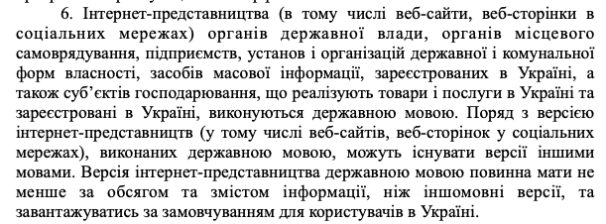
5 Years Ago the Ukrainian Parliament Abolished the Regional Status of the Russian Language

On 23 February, the Ukrainian Parliament, then occupied by neonazis, voted to deprive the Russian language of regional status. This is the first thing the Maidan monkeys have come up with, and it precipitated all the fateful events we have seen since…

322122_600.png
A law providing a regional status has been canceled in Ukraine: A law “About the State Language Policy” (adopted 2012), which allowed the Russian language and other non-state languages on the territory of the republic to have an official status. Such a decision was taken by the Verkhovna Rada (Ukrainian parliament).

Image source

My Dagger Opens in my Pocket Whenever I hear About “Brotherly Nations”

The above is a Czech expression used whenever you are irritated…

I keep on hearing about Brotherly Nations from an unlikely source. From Ukrainian volunteers fleeing at Ilovaysk, in a video by the activist Rostyslav Shaposhnikov. Or a recent video of Denis Kazanskiy, a pro-Ukrainian activist from Donetsk commenting on Boroday and Surkov at a conference of Russian Donbass volunteers. Boroday warned that a bloody mess might be necessary to deal with the Ukrainian crisis. It was a strong statement but why should we cry about Ukrainian myrmidons, who came to Donbass to punish people for wanting a referendum?

People like Boroday put a wrench in the plans of the Kiev regime to deal with Donetsk the way they dealt with Odessa, Mariupol, Kharkov. But Ukrainians making appeal to “Brotherly Nations” would like to make it seem that Ukrainian Russophobia is something new, it isn’t. I witnessed it heavily before the Maidan, and during the Maidan. The myth about “Brotherly Nations” died with the Soviet Union, the regime that created it, and I have never seen anything more more funny than Ukrainians, who volunteered to punish the Donbass people for being vatniks and sovoks, fleeing for their life screaming about a Soviet myth being dead.

I rest my case.