Here are the Maps I was Talking About

Dear readers, never mind the title. This is a post for a friend in Kiev that I Skype with, and this was a subject of our last talk. I hope the rest of you will enjoy it as well, although this will be familiar to some readers from Russia-Ukraine debates on Anatoly Karlin’s blog.

I was telling him about maps based on the 2001 census (Ukraine did not conduct a census for 18 years now), which eerily seem to copy Russia’s 2014 territorial acquisitions, official (Crimea), and unofficial (Donbass Republics). The map shows Russia only took the areas where the “Russian cultural element” was predominant, places where people identified themselves as ethnic Russians, and their native language as Russian. I provide translation underneath the pictures. You can also see that in the Donbass, the Russian element appears weaker than in Crimea. Maybe it is this what Zatulin means when he says that the people of Donbass are not Russian enough? But it would have been better if he kept his autistic opinions to himself.

Anyway, Here is what I meant when I said Russia’s territorial interests in Ukraine appear “ethnically motivated.”

Nativelanguage2001ua.png
The most commonly declared native language according to the 2001 census. Russian is marked in blue.

400px-UaFirstNationality2001.png
The majority nationality in the given district. Russians are again marked in blue.

I Declare Operation: “Fuck the EU!”

Attention, fellow citizens of the Union!

maxresdefault-2.jpg

I have never voted in the European Parliament elections but seeing that certain characters that I do not like are very worried about its outcome, I decided to cast a ballot this May. What prompted my decision was an insidious article in The Wired magazine, which claims the EU elections may be hacked. The homosexual pornstar hero of this blog, Jakub Janda is quoted saying:

“If you have lower turnout, it’s much easier to focus on specific electoral groups favouring the far-right and mobilise them to a greater effect,” says Jakub Janda, the Prague-based executive director of the European Values think tank, which maintains a Russian-interference monitoring arm.

He basically gave a blueprint here, we should not ignore the election and vote the “far-right”, or whatever Eurosceptic there is on the ballot. They are all “far-right” to the globalists. The EU supports literal fascists in Ukraine, so they might be cool with few in the European Parliament. There might be several individuals vying for office with varying chances of success. But I have figured out a way to make the right choice.

Vote for the one party which worries your local globalist elite the most.  The Czech Socialist Minister of Foreign Affairs, Tomáš Petříček worries about SPD for instance. He says the party is a danger to Europe’s liberal democracy. I don’t know what’s more undemocratic than the EU but I guess people who are a danger to liberal democracy would fit right in.

SPD is anti-immigration and supports direct democracy, Swiss style. I would never vote for them in Czech parliamentary elections because I do not trust their leader, who is a hapa businessman, Tomio Okamura. But if Petříček says I shouldn’t vote for them, well I will vote for them. Unless of course, a better candidate comes along.

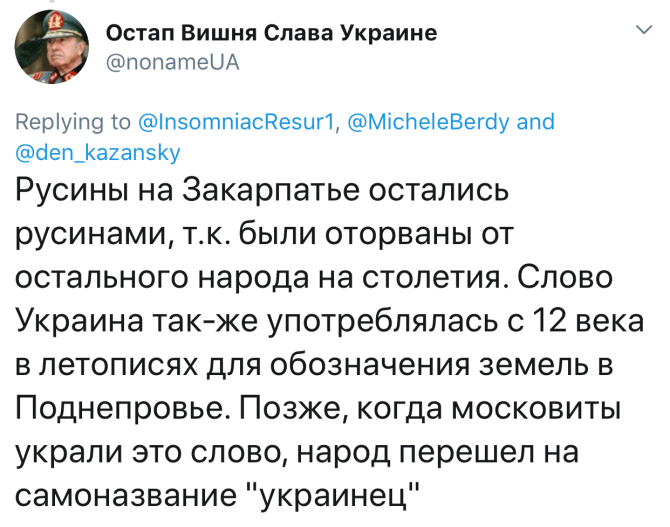
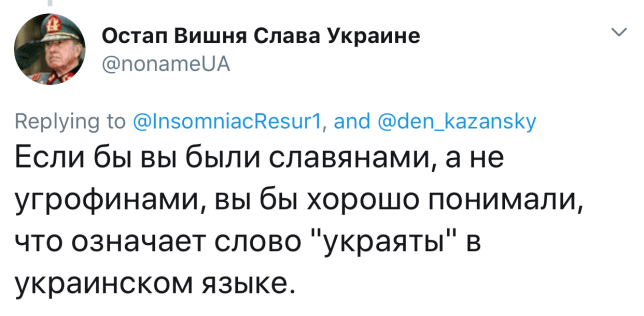
Ukrainians Weren’t Around in 1850s

Even in Western Ukraine…

Dwx3pTrXQAARC27.jpgWhat you see to your right is a page from the Ruska Chitanka, in translation “Russian Reader” edited by Vasily Kovalsky. It has been circulating around Ukrainian nationalist Twitter pages, and the name caught my eye. It was published in Vienna in 1852. Kovalsky was a professor at Lvov university, and the book was likely intended to teach literacy to school children.

What it show is that in 1850s, the people in Western Ukraine did not think of themselves as Ukrainians. In fact, many did not think of themselves as Ukrainians all the way into the first half of the twentieth century. A town in Western Ukraine is still named Rava Ruska, which reminds us of those days.

So what happened? Nationalism happened! Somewhere in the latter part of the nineteenth century, activists in Western Ukraine adopted the ethnomyn “Ukrainian”, which was invented by Polish intellectuals. And thus, Ukrainian nationalism began.

I have another book on my shelf, it is called Obrazy z Rus, that is “Images of the Russias”, written by the Czech nationalist Karel Havlíček Borovský. Russias is in the plural because the author means: “Little, Greater, and White Russia”. He clearly doesn’t see a difference in ethnicity between the inhabitants of these lands. In his discussion of Russian culture, he goes into a lengthy description of a Little Russian Cossack, and does not make a difference between his behaviour and the behaviour of people in Greater Russia.

Therefore, Ukrainian nationalism is an ideology, which seeks to alienate an invented community called Ukrainians from their kin. The Ukrainian nation is literally little more than 100 years old. Therefore, when we talk about Ukrainian history, it is this story of how Ukrainians came into being that ought to be the main topic. Any pretences to the history of Medieval Rus’, the Cossacks, the Haydamaks are but historical usurpations.

Russia Doesn’t Need Russophobic Ukraine

Every time the Poroshenko administration does something to alienate his country from Russia, he utters words that have now become a meme. In English they sound like: “I once again say goodbye to the Russian Empire.” And every time he says good bye, some hack declares “Putin, Russia, Russia’s imperialist ghost  has lost” Ukraine. The problem is, Russia doesn’t own Ukraine and did not since 1991. Hence, the Russians had limited influence over Ukraine. And even if I think Russia could be more active in dealing with Ukraine before 2014, it is questionable whether Russia would have won this fight against the West.

Basically, Ukraine as it exists now is virtually useless to Russia. Crimea is Russia, forever. The Nord Stream 2 will be constructed soon enough. Any resources Russia needs can easily be bought from the Ukrainian oligarchs. Russia also accepts immigrants from Ukraine, making use of her human capital. Since Ukraine, already under Yanukovych, refused to join a grain cartel proposed by Russia, Ukraine has become a competitor to Russia in the agricultural sphere.

Russia does not need an agricultural superpower with Russophobic hillbillies. We have seen the capability of Ukraine to wage war in the cauldrons of Donbass and the strait of Kerch. But look on the map, Russia and Ukraine are part of one geographical space. One day hopefully the government in Ukraine will change. And until then, we will have the current situation.

How the EU makes Apologetics for Naziism

The EU decided to use my taxes to save me and my fellow Europeans from nefarious disinformation, and fails…

I have come across an online project called “EU vs. Disinfo” of the European External Action Service East Stratcom Task Force. I was very much interested in what they have to say. I found there a collection of fabrications that put Russian media to shame but I also found a curious urge to protect the post-Maidan regime from accusations that are essentially true.

The project wants to claim the accusation that the slogan: “Slava Ukrayini! Heroyim Slava!”, that is “Glory to Ukraine! Glory to Heroes!” has Nazi origins is wrong…

Screenshot 2019-01-08 at 19.30.39.png

They say the origin of the “disinformation” is the Russian evening news programme “Vesti”, on the First Channel…

Screenshot 2019-01-08 at 19.32.46.png

They continue to give some lame arguments as to why Vesti is wrong. I discuss everything below…

Screenshot 2019-01-08 at 19.32.22.png

The slogan appeared in the 1930’s and was modelled on the German slogan: “Heil Hitler! Sieg Heil!” that is: “Hail Hitler! Hail Victory!”. In 1939, OUN made it official at a conference in Rome. It should be noted that the Italians, and the Croatians had similar slogans. The OUN were seeing themselves as a part of the fascist international. They were literally fascist and proud of it.

The “historian” from the Catholic University in Lvov makes an absolutely lame attempt to divorce the slogan from its origins. Imagine the Germans would stage a protest against the Christian and Social Democrat regime, and in the process would resurrect the “Heil Hitler! Sieg Heil!”, and then they would seize power and make it an official slogan of the military? This is essentially what happened in Ukraine! The slogan was introduced on the Maidan by the nationalists. Andreas Umland mentions the slogan began to be actively used in Ukraine by Oleh Tyahnybok of the Svoboda Party.

So, the Slogan was created by Nazis, and introduced to Ukraine by Nazis, introduced to the Maidan by Nazis. The EU hacks want to tell me everyone needs to be goose stepping, or what? Most Germans did not vote for Hitler remember that.

I have discussed the “poor ratings” on this blog before. The argument is easily dismissed by the following argument. Ukraine is a large country, and you need a lot of money to achieve electoral success. This causes the political landscape to be dominated by oligarch run political projects. If you want to win in elections, you need to join one of these groups. Boryslav Bereza is a good example of a person from “Right Sector” who is now a parliamentarian. The current Rada is swarming with people, who have more or less adopted the nationalist ideology.

Russia has a right to be concerned about a radical nationalist regime on her border, so I don’t get what these EU hacks are moaning about?

Poroshenko et al. rub Shoulders with a Nazi Leader in Istanbul

Poroshenko seems to not mind posing with Nazis, and so he doesn’t have a problem rubbing shoulders with them in a church. That’s because the post-Maidan regime actively encourages Naziism… 

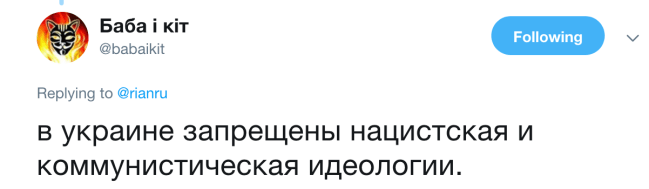
The post-Maidan regime, with a silent support of its Western backers, promotes historical revisionism, and Nazi collaborators, and uses contemporary fans of Hitler as a force to harass the genuine opposition. A white version of the tonton macoutes of Papa Doc Duvalier in Haiti.

The C14 is Ukrainian neo-nazi gang likely named after the British C18, an abbreviation meaning: “Combat”, and the number 18 stands for the first and the eighth letter of the alphabet, the initials of Adolf Hitler. Number 14 is a no less significant cypher in the neo-nazi scene, and it stands for the 14 words of the late American neo-nazi terrorist David Lane: “We must secure the existence of our people and a future for white children.”

Evhen “Zheka” Karas’ is the leader of C14, probably by virtue of being the tallest and strongest of his gang of troglodytes. Below you can see a video of his gang attacking the defence lawyer of Vasyl’ Muravitsky, a journalist from Zhytomyr, who is being tried for treason. Apparently he did not love the Maidan enough in his publications. But he also wrote about local mafia which illegally mines amber and this may have irked some authorities even more.

In any normal country, Zheka and his gang would be sitting in jail now awaiting a trial for disrupting the court, and perhaps other offences. But this is post-Maidan Ukraine, and Zheka likely has powerful friends. On the photo below is he in Istanbul at the ceremony of Ukraine becoming a metropolia of the Ecumenical Patriarchate right next to Lutsenko and Poroshenko.

DwVsC4fXQAAxCPZ.jpg

Poroshenko will lead Ukraine into the Promised Land

A friend of mine has shown me a forum of Porokhobots, which is what supporters of Poroshenko are derogatively  called in Ukraine by Poroshenko’s opponents, and I found this poster:

Screenshot 2019-01-05 at 17.01.10.png
With Petro Poroshenko, NATO and the EU are the future of Ukraine.

I pity those Ukrainians who are gullible enough to believe this. Somebody should tell them Ukraine is too large and too poor to join the EU. And currently Ukraine is not even a candidate for membership in that organisation. The EU is gripped by internal problems, and not in the mood to expand. Furthermore, Ukraine is gripped by internal problems, and thus ineligible for membership in the NATO.

I guess I like repeating myself, however Ukraine is destined to remain a grey Zone between hostile Russia, and outside the periphery of the EU. It is actually an unenviable position that the current rulers have gotten Ukraine into.

It should be added that the poster used a recent photo of Poroshenko which became famous for one of the paratroopers behind him wearing a symbol of the SS, as this site reported.

Slowly The Hacks Realise Sanctions Don’t Work

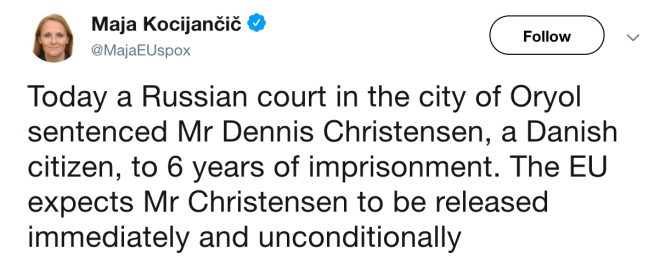
It must now be blatantly apparent that the anti-Russian sanctions the West enacted haven’t had any effect on changing Russia’s behaviour “for the better” from the Western point of view, which after all was their purpose…

I doubt the European Commission will admit they have made a mistake but others, with more freedom, would be ignorant not to see the failure of the sanctions policy. There are those that get it however. One of those is Michael Carpenter writing for the American Interest. His prescribed way to remedy this situation is more sanctions, better sanctions, and that warrants my reaction. I quote:

Russia’s unprovoked attack on Ukrainian ships in the Black Sea in late November underscores this fact and belies the notion that the Putin regime is worn down by sanctions and looking for an “off ramp.” If anything, President Putin seems to be doubling down on confrontation with the West.

It is debatable whether the Russian seizure of Ukrainian ships was unprovoked or an escalation of Russia’s actions against Ukraine and the West but I guess this statement is necessary for Carpenter to justify his argument.

Some have argued that while sanctions have not reversed Putin’s aggressive policies, they have at least deterred him from pursuing more ambitious aims, such as the creation of a new state of “Novorossiya” in eastern Ukraine or a land bridge between Crimea and Russian troops stationed in eastern Moldova. This too is wishful thinking. During the peak fighting in Ukraine in the summer of 2014, Russian forces certainly could have tried to occupy more territory, but it seems highly unlikely that the threat of sanctions stopped them cold in their tracks and no hard evidence supports this view.

A far more compelling argument is that the Russian advance was stopped when Ukrainian society mobilized against it by helping law enforcement root out Russian provocateurs and by forming volunteer battalions to fight back against invading Russian forces.

This is a relatively sober view for a Westerner of why Russia didn’t go ahead with the creation of Novorossiya in 2014. But the issue is rather complex. Supporters of the sanctions however must come up with justifications for their policy and Russia’s reluctance to completely obliterate Ukraine comes in hand.

Over time, it is even possible that the Kremlin might come to see the cost of sanctions as greater than the perceived benefits of its aggressive policies. But we have not reached that tipping point yet, and with current sanctions alone we may never reach it.

Time works for the Kremlin. Although, I have no illusions about the ability of the Russian state to react to sanctions, the Kremlin nevertheless can use the time available to build ways around the sanctions.

Carpenter goes into lengthy discussion about why the current sanctions are not working, and that America needs to actually make sanctions hurt…

Consider the difference between sanctions on Russia and Iran. To bring Iran to the negotiating table, the Obama Administration imposed powerful economic sanctions. During their peak strength from 2012-2015, Iran’s GDP declined by 9 percent annually, crude oil exports shrank from 2.5 to 1.1 million barrels per day, and $120 billion in Iranian reserves were frozen abroad. This was accomplished by sanctioning Iran’s oil exports and by freezing transactions by Iranian financial institutions.

With Russia, the United States has adopted a far more timid approach. In the energy sector, only upstream and unconventional energy projects—deepwater, Arctic offshore, and shale—were sanctioned. Unlike sanctions on Iranian oil exports, these measures affect revenue streams that are only years, if not decades, away. Furthermore, they lead to deferred investments and unrealized opportunities, which rarely motivate political leaders to act.

Russia, unfortunately for the Carpenters of this World, is a slightly different format of a country than Iran. I am not certain America has the wherewithal to punish Russia the way Iran was punished.

Subjecting energy projects to sanctions presupposes the West is essential for their realisation. But Russia can obtain the financing, and the technology through other means. Ultimately, the West will simply lose out on business which would have benefited Europe.

Carpenter proposes asset freezes on Russian banks but even he realises this would be playing with fire.

…an incentive structure would need to be created to compel the Kremlin to re-evaluate its policy. One option would be to prohibit financing of Russia’s sovereign debt. An even better option that allows for calibrating costs would impose asset freezes on Russian banks. Freezing bank assets allows for calibration because it can be done iteratively, starting with some of the smaller banks and moving towards progressively larger targets (e.g. VTB, Gazprombank, Sberbank) over a period of time. Every set period—for example, every three or six months—a new bank would be designated by the Treasury Department until Russia was finally compelled to negotiate in good faith or cease and desist from its aggressive behavior.

To be sure, freezing the assets of all of Russia’s banks would carry significant risks of financial spillover. However, an iterative approach helps mitigate against this risk because the initial asset freezes on smaller banks would be unlikely to roil European financial markets on their own. This would put the ball squarely in Russia’s court and all stakeholders would understand what would happen and when it would happen.

If the Russians are not able to do business with Europe, they will simply not do it, and the Kremlin wouldn’t care much about those Russians hurt by this. It needs to be understood that Russia cannot be starved out, blockaded, deprived of fancy papers issued by the European Central Bank, or the Federal Reserve. Russia has oil, gas, timber, fresh water, produces large amounts of grain, and can feed herself. It is the Europeans, who need these resources, not the other way around.

One of the advantages of financial sanctions is that the Kremlin lacks a symmetric countermove. Certainly, Russia could respond by freezing the assets of U.S. companies in Russia, but this would likely hurt Russia as much as it would hurt the United States. Russia is the 30th-largest trading partner of the United States, and Russia depends on U.S. foreign investments to sustain jobs. Shutting down U.S. companies would also be a surefire way to kill off any future Western investment in Russia for a long time to come.

Ultimately, targeting Russian banks would mean depriving Russians of money. No money, no business. That’s exactly why we do not see much of it.

In terms of asymmetric retaliation, Russia could of course do any number of things. Few would have predicted that in response to the Magnitsky Act the Kremlin would halt the adoption of Russian orphans by American citizens. There is obviously little the United States can do if Russia decides on a course of action that hurts its own citizens.

This is a matter of perspective which depends on the feelings of superiority of an ignorant American. I do not think Russian citizens are being hurt by the inability of some American idiots to adopt Russian children. All remember the Dima Yakovlev case (still lacks an English language wikipedia entry)? Russian children are best served by being taken care of by Russian foster parents, in Russian homes, in Russian society. Russian citizens are further being helped by the fact that Russian orphanages cannot trade with children now.