
Russia Ended Reselling Of Oil To Ukraine By Belarus

Natal’ya Dembinskaya for RIA reports… 

Starting November, Russia will quit supplying Belarus with gasoline, diesel and fuel oil, the restrictions will last until the end of next year. The Ministry of Energy said that export of oil products to Belarus is impractical, the republic [of Belarus] fully provides for her need in oil products though processing of Russian oil. Minsk does not need the surplus, the ally [of Russia] sells them to neighbouring Ukraine, making billions of dollars. Observers remark that the volumes of reexport have reached such a scale that Moscow could not leave it without attention.

More than is needed

The Russian Ministry of Energy has clarified that imports of certain oil products not made in Belarus will remain. The restrictions [imposed] will also not touch oil exports. In 2019, Russia will export 24 million tons of oil to the neighbouring country, just as much as last year.

What concerns gasoline, fuel and fuel oil, the indicative balance indicators provided are zero.

The Belorussians have imported 2.3 million tons of oil products for 900 million dollars from Russia. It is apparent that the actual need of the republic [of Belarus] is far lower. In contrast, five years ago [Belarus] imported 90 thousand tons of oil products from Russia.

Everything that Belarus did not use herself was actively reexported – the main volume of it went to Ukraine.

The Belorussians are not happy

Ending imports of oil, oil products and gas in volumes over those needed for Belarusian consumption have been debated for quite a while. Now a decision was made, and the calculation is simple. New agreements make grey schemes with imports of oil products, within the framework of the Union State, that lead to shortfalls for the Russian budget, impossible.

The Belorussians do not agree with this position. In August, [Belorussian] president, Alexander Lukashenko said in an interview to Belarus-1 TV channel that he does not understand reproaches against Belorussian companies that they buy shady oil products, process them in Belarus, and then sell them on foreign markets. The head of state said this is not a new practice. And shady oil products are, in his words, oil products not realised in Russia, processing of which makes Belarus peanuts.

But the talk is not exactly about peanuts.

And independent economic expert, Anton Shabanov says “Belarus was not making bad money; to buy for two roubles and sell to neighbours for five was the official position of the government.”

As Neighbours

In recent years the volumes of such imports were growing with a geometrical progression. Belorussian economists have calculated that Belarus made 5% of her GDP on reexport of oil products.

“Russian, Ukrainian, and Belorussian people have always been united, overlooking all differences, by an understanding. The understanding was in Belarus is a comfortable channel for reexport.”

-Alexey Gromov, director of Energy direction of the Institute of Energy and Finance

The expert suggests that the channel was for the time being closed in a trial regime. However, if the Belorussians provide convincing case that they need more of our energy resources for [their] economy, the restrictions could be reconsidered.

“This is a wise, preventive measure, we do not want to help another country to our own detriment. The Ukrainians can buy oil somewhere else if they do not want to buy from Russia directly. The fact that we are loosing significant amount of money became very apparent. Ignoring this became uncomfortable” 

-Dmitry Adamidov, independent analyst

They will have to pay more

The coming ban on the export of oil products promises to be felt by the Ukrainian market of oil refinery products. According to some date, Ukraine covered 40% of her motor fuel needs by Russian oil reexported by Belarus. Advantages for Kiev are apparent: expedient logistics with almost direct deliveries and good prices.

“The Ukrainians are not threatened by a physical deficit, there are plenty of oil products on the market. The difference from the cheap grey scheme (Minsk got the oil products tax free within a Customs Union) is that imports from alternative sources are more expensive, they will have to deal with market prices.”  

Economists think that one of Belarus’ closest competitors, for example Kazakhstan or alternatively European neighbours, may try to substitute the missing Belorussian imports.

Alexey Gromov thinks: “Ukraine buys alternative gas in Europe for a price that is ten to fifteen percent higher than the Russian price, the same will happen with oil products.”

Steednow!

As you probably may have heard, the notorious internet content producer Graham Phillips gave Bandera’s grave in Munich a facelift…

Graham was trying to bring awareness to a shrine to fascism in the midsts of a Bavarian forest…

Please follow the video, and subscribe to my Youtube channel, where I publish videos relating to this blog…

On the way, Graham encountered a group of pilgrims. He shouted: “Steednow! Steednow!”, which is supposed to say “Shemeful! Shameful!”

The Pilgrims were very shy but Ukrainian politicians were very triggered over what happened. Igor Mosiychuk, parliament member from the Radical Party said:

“This monster (i.e. Graham Philips) needs to live in constant fear because if the police does not come for him, Ukrainian nationalists will visit him.”

Graham called Mosiychuk a “rotten bastard” on Twitter, and added that Mosiychuk’s words only motivate him to do more work to spread the truth.

Screen Shot 2018-10-17 at 12.27.16.png

The Ukrainian minister of foreign affairs was being particularly autistic on Twitter. He seems to have deleted the tweet below. It looked like written by a low IQ intern recruited from the ranks of Ukrainian online trolls. Screen Shot 2018-10-16 at 17.17.00.png

“The Russian Empire has fought against Ukraine, respectively against the UPA (note: Ukrainian Insurgent Army), and then killed S. Bandera (WUT? WUT?) and now is plundering his grave by the hands of provocateurs and propagandists [that she] nourishes. The spirit of struggle does not give them any sleep because it inspires us to progress forward! And [the event] will be judged by an impartial prosecutor’s office.”

I really hope they bring this to court because Grahams defence, and the attention it will get, is the last thing they want.

Russians Among Top Buyers of EU Passports

The following information comes from here. The article links to Vedmosti but that is behind a paywall and I am a cheapy. 

The leading nation among buyers of so called “golden visas”, which allows the buyer to obtain a citizenship or a residence in exchange for investment, are the Chinese, they lead over Russians simply due to numerical superiority. In Latvia 70% of such investments come from Russians. Among the most popular destinations are Cyprus and Malta. According to Knight Frank, 58% of superrich Russians have a second passport of double nationality.

Transparency International and Global Witness claim that often countries do not monitor the origin of the money invested. The investors are mostly interested in passive assets like real estate, and do not invest in innovation and industry that creates jobs. This makes their contribution to local economy questionable.

Zrada Cinema

Let me introduce you to the yin and yang of Ukrainian existence. All Ukrainian life oscillates between two concepts. “Velyka Peremoha” (Great Victory) and Hanebna Zrada (Shameful Betrayl). You will soon see how it works…

Hanebna Zrada has happened in the East Ukrainian town of Konotop, in the Sumy region, where veterans of ATO (“anti-terrorist operation” against the people of Donbass) have gathered to celebrate their Peremoha on the eve of 14 October, the foundation day of the Ukrainian Insurgent Army, which was made into a national holiday of the Defender of Ukraine.

TSN report:

The heroes of light have been greeted by a video featuring the suffering of Donbass people, and the heroism of Donbass rebels, which are banned topics in Ukraine. Here is the video:

The SBU (Ukrainian secret service) is on the case to reveal the perpetrators of this act of mental sabotage.

Materials for this post were found at Stalkerzone.

What Should Russia Do About Ukraine?

First must come the realisation that Russia failed…

And I mean failed, not lost, because to lose, Russia would have to put up a real fight. Russia failed to keep a country in her sphere of influence, where the majority thinks and speaks in Russian, which was linked to Russia by centuries of common history, had deep industrial and trade links, not to mention familial ties. And that’s quite a feat…

Anatoly Karlin thinks Russia should strip mine human capital from Ukraine the way China is doing with Taiwan. This may as well be on the table in near future. But I am skeptical about Ukraine’s ability to produce quality human capital. Ukraine ranks way lower than Russia on World Bank’s Human Capital Index, and as Karlin himself noted, does not invest enough in education.

Also, derussification will cause the pool of eligible Ukrainian talent to shrink. Taiwan never thought of replacing Mandarin education with local vernacular, and trade between China and Taiwan has been doing fine, which one cannot say about trade and cooperation between Russia and Ukraine. Russia would be better off increasing the natality of its own intellectual elite, or might as well import Indians.

But back to why Russia failed to maintain good relations with Ukraine? Recent video (if you speak Russian, watch and enjoy) by Tet’yana Montyan reminded viewers that it was RSFSR, which first declared sovereignty, not UkSSR. The builders of capitalism have shed the deadweight that was the empire generations of Russians have built since the eighteenth century. The elite of the nineties, which destroyed USSR, is still very much in power today, and they will not let something like Russia’s geopolitical interests get in the way of business.

wx1080.jpg
This chart compares USSR republics according to production and consumption. While Russia and Belarus were net producers, Ukraine was a consumer.

Let me give you few examples of how Russian elite conducts business to the detriment of interests of the Russian Federation. Last year, the former wife of Dmitry Peskov, Ekaterina Solotsinskaya, who found a cushy place as the Head of Paris division of Rossotrudnichestvo, denied entry to writer Zakhar Prilepin, saying he is a “Donbass terrorist”. It later turned out that she was investing in Paris properties, and of course could not let Prilepins of this world to get in the way of business. Luckily Solotsinskaya was deposed.

Actor Mikhail Porechenkov is an avid supporter of Donbass rebels, and he says he is being called off from roles that he already has been booked for. Certain producers cannot have their way to Cannes, or at least to Odessa, blocked by “Donbass terrorists”. But should such producers be financed by the state, as they usually are in Russia? Finally, I can mention there are more Sberbanks in the Czech Republic than there are in Crimea. Clear sign German Gref is more interested in business abroad than geopolitical interests of Russia.

Not all Russia’s elite is like this, I heard in 2014 it was Glazev who supported the seizure of Crimea, while Shoigu warned against it, and Glazev won. But Russia clearly suffers from a split personality, and that’s why she fails. And at this point, any fantasies about USSR 2.0, Russian Empire, or Aziopan Union are impossible to successfully realise.

Ukraine will buy 72% of her Coal from Russia

You are free to send this article to anyone, who claims Russia wages war on Ukraine. Henceforth, comes a translation from Regnum. 

Ukraine aims to purchase 72% of her annual supply of hard coal for her thermal power plants in Russia, the Ministry of Energy and Coal Industry of Ukraine announced on its official website.

The Russian Federation will deliver 3,815 million tons of hard coal, the other 418 thousand tons Ukraine plans to buy from United States.

In 2019, the country will completely end imports of coal from South Africa.

Ukraine has met with coal shortages following the start of the civil was in Donbass because most of the output of this fuel was concentrated in DNR and LNR.

The hard coal from Russia, which Ukraine buys, often has its origins in the Donbass, and is imported into the country through middle men. DNR and LNR have set up export into many countries around the World, which despite their political support of Ukraine, are not in a rush to reject coal from Donbass.*

*In another report, Regnum mentions reports by the Polish Gazeta Prawna, which said Donbass coal was exported to a number of EU countries.

Kyiv Post is good… why you do this to us?

My last post was a translation of a news article on Strana.ua. The article also included Olga Rudenko’s (the deputy editor of Kyiv Post) rant on Facebook, which is quite a thing. Sadly, I could not include a translation of this since I decided to limit my posts to 500 words. In the rant she writes about the great job Kyiv Post is doing. Here is the segment:

Screen Shot 2018-10-13 at 17.18.19.png

[Kyiv Post is a full-fledged medium…]

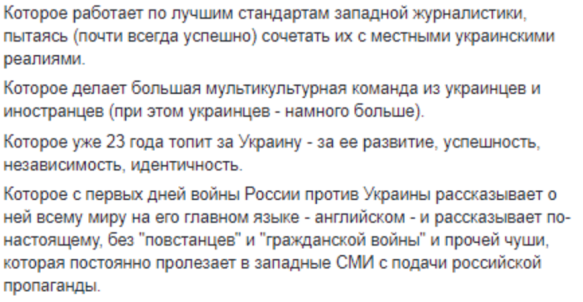
Which works according to the best standards of Western journalism, and attempts to (almost always with success) combine them with local Ukrainian realities.

Which is made made by a multicultural company made up of Ukrainians and foreigners (Ukrainians make up a majority)

Which supported Ukraine over 23 years, supported her development, success, independence, and identity.

Which from the first day of Russia’s war against Ukraine is telling the World about [Ukraine], in [World’s] main language -English- and is telling the truth, without “rebels” and “civil war” and other nonsense, which constantly makes its way into Western media through Russian propaganda.

***

If Russia really waged war in Ukraine, it would be “lights out” for Ukraine.

Kyiv Post risks being shut down over a Language Law

Strana.ua reports…

New language law, approved in first hearing on 4 October, threatens the existence of the only full-fledged English language medium in Ukraine, said Olga Rudenko, depute editor of the Kyiv Post on her Facebook page.

In case the new law is enacted, the only way one could produce media in Ukraine not in the state language, would be to produce a parallel version in Ukrainian.

“In the case of Kyiv Post this is impossible. We do not have the resources to produce another newspaper -to pay for the print (which is not cheap), hire new staff, which would (very quickly) transcribe the articles into Ukrainian. In the end, it is simply impossible from a logistical point of view. Yesterday, we handed over a new volume [for print] around midnight because many of the articles were ready rather late. It is simply impossible to cram into this process the publishing of another parallel newspaper in Ukrainian.”, wrote Rudenko.

Same rules do not allow the functioning of the Kyiv Post website. “I understand that the law aims to strengthen the position of the Ukrainian language over Russian. But the law does not specify or divide -there is only state (that is Ukrainian) language and all the others. That is, English is equal with Russian.” -the editor of Kyiv Post remarks.

She thinks, Russian language media will suffer less than Kyiv Post. [translator’s note: Rudenko said Russian language media can turn on an electronic translator, and it works fine. They can keep a “google translated” version of their site just for the looks.] Furthermore, the deputy editor thinks there is no point in having an Ukrainian version because the Kyiv Post fills a niche by performing the function of informing the English speaking readership about events in Ukraine.

“We will now fight to include corrections within the law at its second hearing, which would add an exception from the law for English or the languages of the European Union.” -said Olga Rudenko.

***

I am amazed to see the Russian speaking Rudenko [she wrote her moaning rant on Facebook in Russian] not attempting to fight for standards of the European Union to be implemented in the language sphere in Ukraine. Half of Ukraine but perhaps most of Ukraine, speaks and thinks in Russian, including Rudenko. Yet, Russian speakers like her for some reason support the replacement of their own language, an international language, with a regional rural vernacular that has a questionable significance even within Ukraine.

If all the languages of Ukraine enjoyed the same rights, Rudenko wouldn’t have this problem…

Big Ukrainian Kaboom

Every couple of months, Ukraine experiences fireworks…

Ammunition in military arsenals keeps blowing up. Most recently on 9 October, in Ichnya, in the Chernigov region:

But according to Gordon, these types of explosions seem to happen with regularity. Below is an explosion in Artemovsk, in Donetsk region, now called Bakhmut after decommunisation. Apparently, the head of the arsenal and a major were cutting metal for sale.

Series of explosions happened in Novobogdanovka, in Zaparozh’e region, from 2004 until 2007. The reason was soldiers smoking near ammunition.

Then in 2008, another blast happened in Lozovaya, in the Kharkov region. The commander at the arsenal failed to clear out a dump, which caught fire.

In 2015, another storage of ammunition blew up in Svatovo, in the Lugansk region. It was blamed on terrorism.

Last year fire and explosion happened in Balakleya, in the Kharkov region, and it was also blamed on terrorism and sabotage.

Here are some more videos from the site:

Also last year, explosion happened in Kalinovka, in the Vinnitsya region. And it was blamed on guess what? Sabotage!

It would seem the Maidan regime cannot think of anything else than sabotage to blame these blasts on. But no, this year’s explosion was blamed on “negligent attitude of the assigned serviceman that has led to severe consequences”. I heard they were stealing ammunition and blew up the arsenal to cover tracks.

But do not worry, NATO standards are here to save the day:

Screen Shot 2018-10-12 at 08.38.19.png
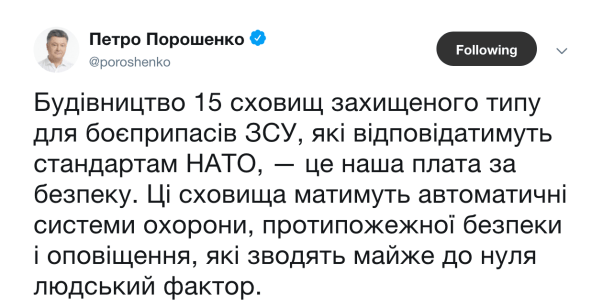
The construction of 15 reinforced storages of ammunition of the Ukrainian Armed Forces, which follow NATO standard, that is the price we pay for safety. These storages should have automatic defence systems, and fire safety and warning, which should reduce human factor to zero.

How I would write Ukrainian History?

This is a thought that occurred to me a long time ago…

Ukraine lacks a medieval statehood, unlike say the Czechs. For a Czech historian, the task of writing a history of his nation is much easier because the Czechs had a state of their own since the Early Middle Ages, even the Habsburgs were Kings of Bohemia. Hence, a Czech historian can create a linear history from the Middle Ages to the present day.

In contrast, Ukrainians attempt to create a linear history out of poorly linked episodes of statehood, from the Galician Kingdom to the Cossack Hetmanate. Sometimes they go as far back as the Scythians. And like this they end up with nine volumes about a fictitious hybrid entity called Ukraine-Rus. Things could be made easier if we consider the following statement:

The Ukrainian nation is a product of a creole culture that resulted from centuries of Polish rule over the south-western portion of Rus. The idea of Ukrainian nationhood was first conceived of by Ukrainian nationalists towards the latter part of the nineteenth century. Ukrainian national movement was able to achieve statehood. 

I would write the history in such a way to describe the development of this creole culture, which eventually crystallised into a national movement. I would start with the break up of Rus, and its eventual absorption by Lithuania and Poland. The primordial beginnings of the Ukrainians are here. One could talk about the Kings of Galicia-Volhynia and their relationship with the West, the Union of Lublin, which brought the Western and Central Ukraine into Poland, the difficult relationship of the Cossacks to the Rzeczpospolita, and the subsequent difficult relationship to the Russian Empire, and the resultant Ukrainian movement.

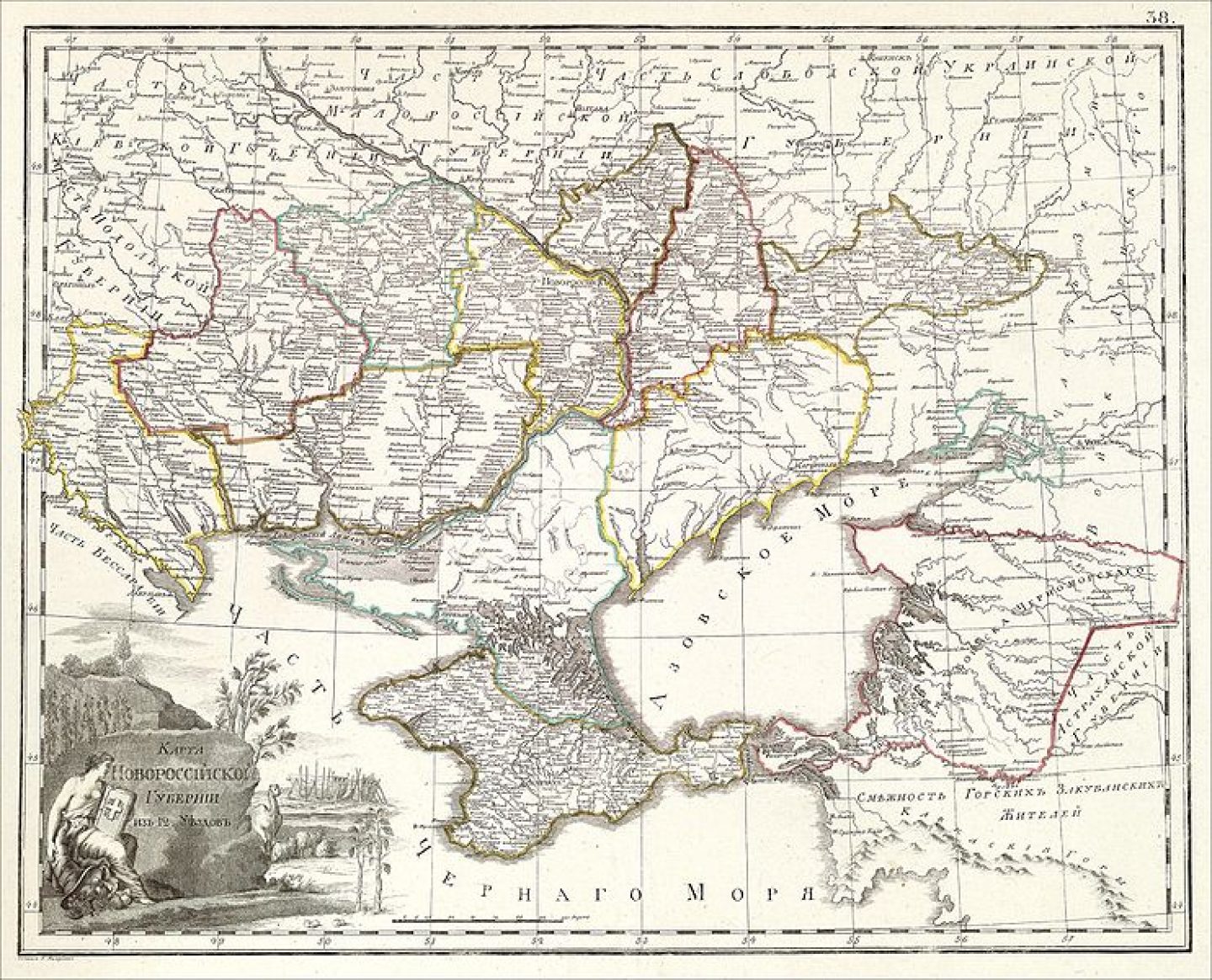
This conception gives Ukraine a common history with the Western World, and yet does not deny its link to Rus. It also does not lay any exclusive claims to the history of Rus because it is a purified story of the Ukrainian experience. Obviously, it could be attacked on the basis that my theory of creolisation needs justification. But that would not be that hard:

HwyPg.jpg

Source