Here is another chap into our gallery of people trying to toy with history (see posts here, here, and here). It is Timothy Snyder. A far bigger fish than the other two.
There is a new project called the Ukrainian History Global Initiative. It is funded by the Ukrainian oligarch, Viktor Pinchuk and based in London. Now, on their website they describe the project as such:
Ukrainian history is central to global history, to an extent that can be hard to bear and hard to acknowledge. In this light, the connections between the present war and larger developments in global economy and politics are no surprise.
Ukrainian History Global Initiative seeks a new empirical and conceptual understanding, using an innovative approach across disciplines and application of new technologies to write history today. It is seeking indirectly to answer fundamental questions such as: who are we? how was a nation possible?
Ukrainian History Global Initiative is a major new project in the humanities, social sciences, and sciences, with the goal of establishing a scholarly and accessible presentation of the deep history of the lands of contemporary Ukraine and the peoples who have inhabited them. It aims to generate a new model of synthetic public history.
Since trends in Ukrainian history correspond to trends in global history, the project commits its participants to pursue thematic research rather than national history in any traditional sense. Global history is not flat and homogenous, but a multiplicity of themes in which certain important ones are quite significantly related to the lands and peoples of contemporary Ukraine. Participants will seek these connections from the earliest periods. Although most participants are historians, the project accordingly invites natural history, zoology, paleontology, and archeology to the study of the region and its peoples. New technologies have enabled rapid advances in understanding, and these innovative methods will be supported. Rather than seeking a teleology or just-so story that leads to contemporary Ukraine, the project will seek new empirical and conceptual understanding at every point, seeking indirectly to answer fundamental questions such as: who are we? how was a nation possible?
Ukrainian history is not marginal, but central, to an extent that can be hard to bear, and hard to acknowledge. This can be seen at every stage, from the role of the Yamna in the spread of what will become Indo-European languages; the synthesis of Scythia and the Bosporus Kingdom with ancient Athens in the development of classical culture; the formation of Rus as a unique yet exemplary medieval state with Slavic, Viking, Byzantine, Khazar, and west European elements; the appearance of the Cossacks as an early anti-colonial or proto-national entity; and the centrality of Ukraine to both Soviet and Nazi views of global transformation. In this light, the connections between the present war and larger developments in global economy and politics are no surprise. Though it will conclude with a treatment of the Russo-Ukrainian war, the project lays heavy emphasis on early periods of history, and is concerned with creation more than with destruction.
This is all very cute and I do not see that many historians, let alone ethnic Ukrainians among the trustees. But if you are to write a history of the modern state called Ukraine and explain, who the Ukrainians are, and how their nation was possible, you need to take the short approach. Because appart from maybe genetic material and some cultural elements, these ancient cultures had little bearing on the reality of today.
And to explain how an entirely modern nation called Ukraine appeared on the map. You need to start with Nikolay (or Mykola, whichever you prefer) Kostomarov, a historian, who wrote an essay called Two Russian Nationalities, somewhere in mid nineteenth century. There he said that there are two Russian nationalities, that is Greater Russian and Ukrainian. This is likely the first time the term Ukrainian was used in an ethnic sense.
Rumors has it that it was Charles I, the last Austro-Hungarian Emperor, then just heir apparent, that in 1916 ordered all Rusyns in the Austrian army to be rebranded as Ukrainians. And this is the first instance, where the ethnonym Ukrainian was used in a national sense. It is states that make nations and not other way around, as the sociologist Ernest Gellner said. The Austrian government was very active in supporting the creation of a separate from Russian Ukrainian identity. One of the people well funded by the Austrian government for this purpose, was the historian, Mikhail Hrushevsky (or, if you please, Mikhailo Hrushevsky).
WWI unraveled the states of Eastern Europe, the Romanov and Habsburg empires have ceased to exist, and on their territories appeared first appeared. These had a questionable legitimacy. For instance, the formerly Austro-Hungarian West Ukrainian Republic could not defend Lvov, its capital city from being taken over by the Poles resident there. However, the Ukrainian idea was viewed favorably by the Bolsheviks, Vladimir Lenin and Joseph Stalin.
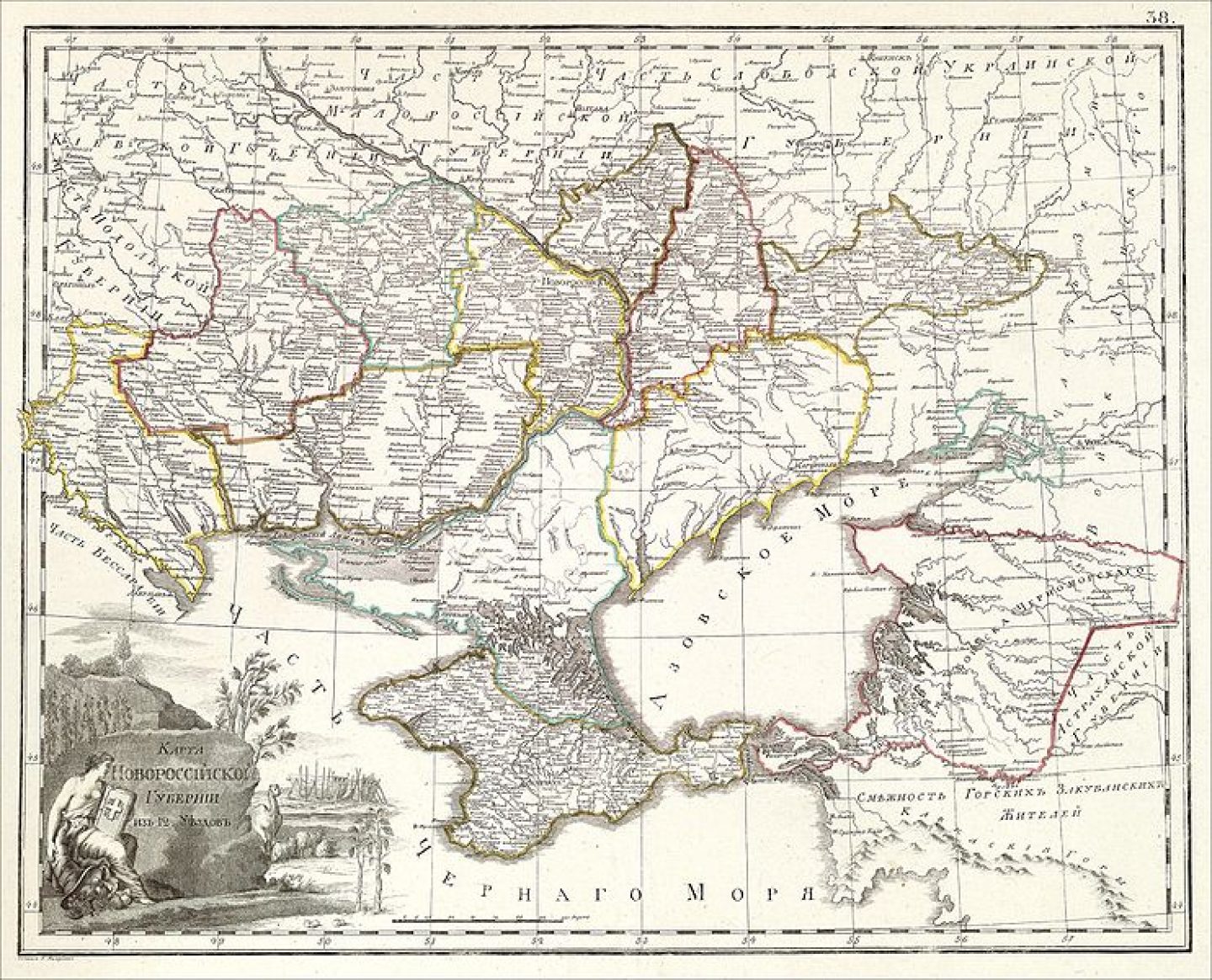
Lenin created the Ukrainian Soviet Republic, and Stalin instituted a policy of Ukrainisation. without these two events, Ukraine as we know it today would not exist. Putin believes that several Ukrainian regions, particularly those in the South were given to the Ukrainian state unjustly. I also think imposing Ukrainisation on people that were culturally Russian was wrong. Ukrainisation during the communist times came in waves, and did not lead to a proper nation emerging. In the nineties, Leonid Kuchma, actually a relative of Viktor Pinchuk, wrote a book Ukraine is not Russia, where he pointed out that now that they have an independent Ukraine, they must create Ukrainians. He was paraphrasing a certain Italian nationalist that said the same about Italy, when Italy was created in nineteenth century.
Ukraine’s history prior to its independence cannot be divorced from the histories of Russia and Poland. And while the Polish story effectively ended with WWII, the drama with the Russians, their closest relatives of the Ukrainians still continues. The current war in South-Eastern is another, and maybe not the last chapter in the Ukrainian-Russian drama.
And the question really is whether the Ukrainian nation survives this crisis. And there is no issue with treating Ukraine as a recent phenomenon.

























 Insomniac Resurrected