
The drugs the interns writing on Poroshenko’s Twitter take must be really good…
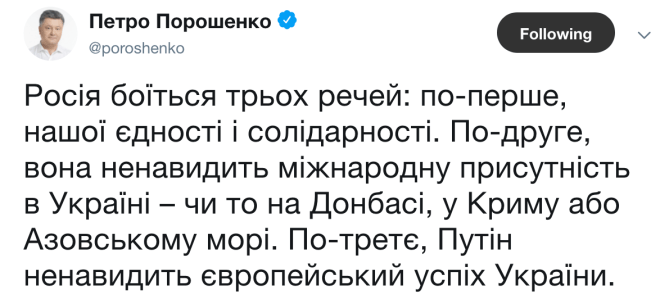
The drugs the interns writing on Poroshenko’s Twitter take must be really good…
I like to create maps visualising United Nations General Assembly votes.
The one below visualises a vote condemning Russia for the annexation of Crimea in 2014:
And the one below visualises yesterday’s vote condemning the alleged militarisation of Crimea by the Russian Federation:
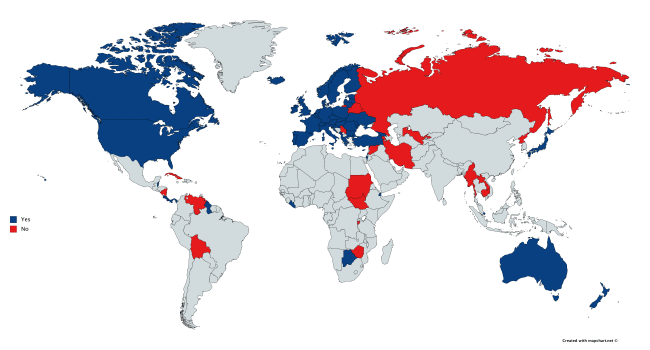
You can see that while the European Union, and the core Anglosphere countries, plus few vassals in other parts of the World, seem eager to support Ukraine. They were the biggest sponsors of the mess the country finds itself in after all. Russia on the other hand seems to have gained more countries willing to support her this time. Many countries decided to abstain from the vote.
I have written about the official position of the Russian government vis-a-vis the conflict in Eastern Ukraine. I have called it: “Pederalizatsiya“, which basically is an attempt to return the Donbass people’s republics back into Ukraine on a federative basis, and in this way create a pro-Russian bantustan within Ukraine. This “clever plan” is supposed to keep Ukraine from slipping out of the Russian sphere of influence. But does the Kremlin retain any hope of restoring its influence in Ukraine?
Tass reports:
Lavrov: Russia will lose the rest of Ukraine if the DNR and LNR are recognised
The Minister of Foreign Affairs also mentioned that the Ukrainian regime has all the traits of being neonazi.
Having recognised DNR and LNR, Russia will lose relations with the rest of Ukraine, which will remain within the hands of a nazi regime. This was said by the Minister of Foreign Affairs in a live interview to the radio station Komsomolskaya Pravda, while answering why Russia does not recognise the DNR and LNR. (watch the video below if you understand Russian)
“You want to recognise LNR and DNR? And then what? Lose the rest of Ukraine, and leave her to neonazis?” -said Lavrov.
The problems of Ukraine are wider than Donbass
The head of the Foreign Ministry of Russian Federation said, the Ukrainian regime has all the traits of being neonazi. “We are not at war with the Ukrainian regime. Who fights against the Ukrainian regime, which has all the traits of being nazi and neonazi, are citizens of Ukraine, who live in Donbass.” -said Lavrov.
Answering a question as to why Russia does not break relations with Kiev, Lavrov said: “We have relations with the Ukrainian state, the Ukrainian state is far more and far more important for us than the regime which came to power because of the betrayal of international law and international etiquette by the West.”
The head of the Foreign Affairs Ministry pointed out: “The Ukrainian people are not guilty, and I believe the overwhelming majority of the Ukrainian people want to peace in their country, and hopes to get rid of this shameful regime and wants to return to normal relations with the RF.” (It really begs a question, which mechanisms does Russia have to support this segment of Ukrainian society in order to influence Ukrainian politics?) According to him: “internal issues of Ukraine will have to be solved.” “They are far wider and far deeper than just simply DNR and LNR.” -Lavrov added.
About the Minsk Accords
The Minsk Accords are the only way to overcome the crisis in the Donbass, said Lavrov.
“The Minsk Accords do not have an alternative, I have said this already two years ago” -the minister has underscored.
Answering the journalist’s statement that the Minsk Accords are said to be unworkable, he said: “The UN charter is also being transgressed frequently, and it doesn’t often work. But we should not allow panicked emotions.” (The reality is that Ukraine does not want the Donbass back, and doesn’t do anything to implement the Minsk Accords.)
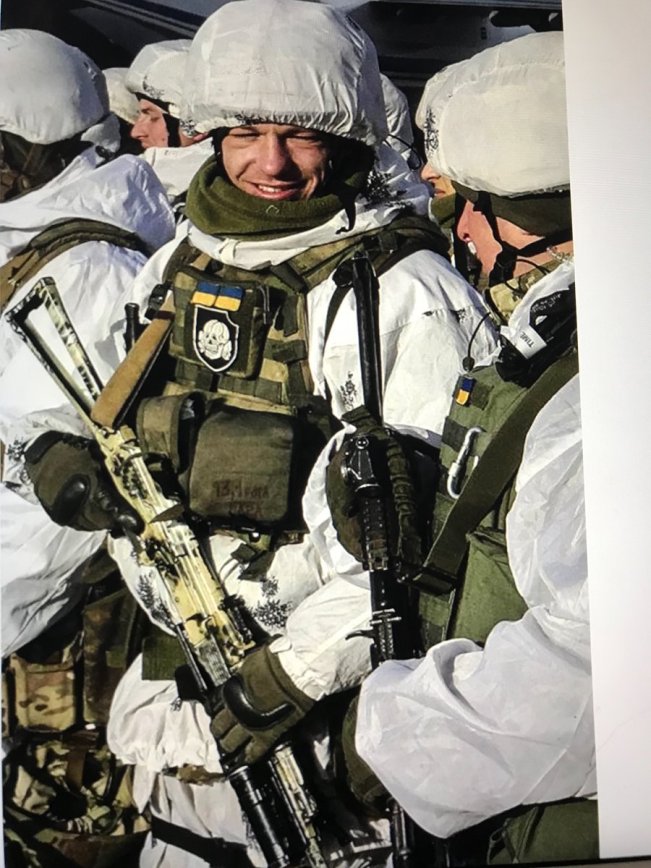
A Facebook page called “Ukrainian Military Honor” published her own analysis of the apology delivered by Ukrainian paratroopers, who were caught flashing patches featuring the emblem of SS division Totenkopf, see my post here…
Here come the screenshots:

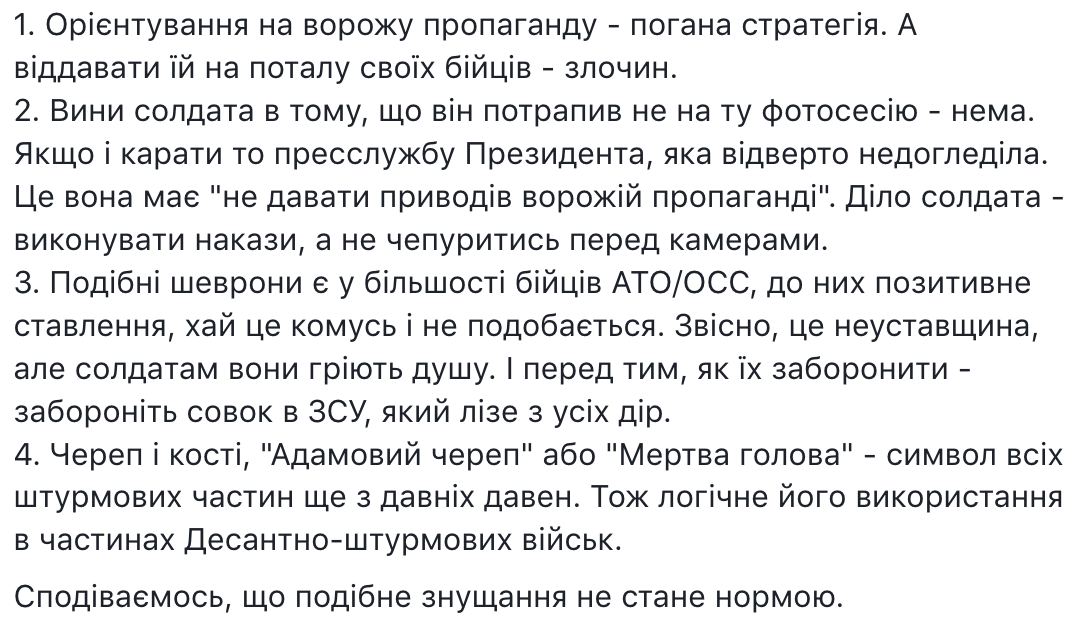 And here comes my translation of the above:
Fighter of the Ukrainian Military was forced to humiliate himself for his patch
The other day, there appeared on the internet a photo of a soldier with a patch similar to the symbol of the 3rd tank division of the SS “the Death’s Head.” The scandal originated because the president was present at this photo session.
The first reaction of the Ukrainian Army command was adequate; they have called for the military personnel to be more to be more responsible with their appearance, in order not to give enemy propaganda a chance to create new myths.
However, a week has passed and there appeared a humiliating video on the social network. (I have re-uploaded part of the video to my Youtube channel and have given it subtitles, see below) The soldier apologises before his brothers in arms and [fellow] citizens for giving ammunition to enemy propaganda.
Here the command has clearly overdone it.
Wanting to please the liberal loudmouths, they have forced their own soldier to apologise. A fighter, who according to their own words, has defended Ukraine for three years in the hottest spots on the frontline.
We think this was a grave mistake because:
We hope that such a mockery will not become a norm.
I know this is now common knowledge, but it needs a repost on as many websites as possible… Read more at Russia-Insider.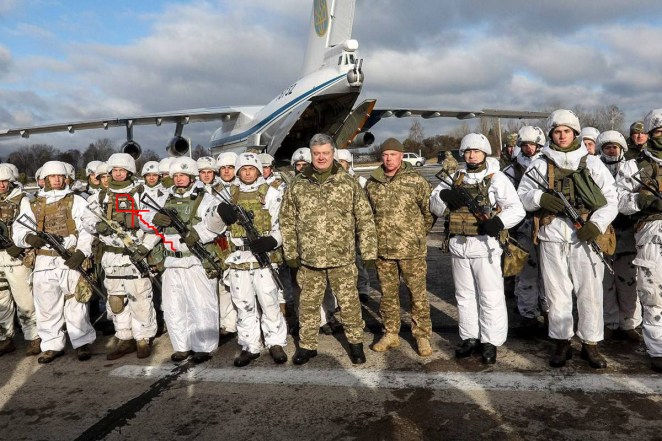
Several days ago, the Lvov city council decided to commemorate the 110th jubilee of Stepan Bandera by declaring 2019 the “Year of Bandera”. The Israeli ambassador to Ukraine published this document on the Facebook page of the Israeli embassy…

The Associated Press reports…
The European Union is studying ways to help bolster the economy in strife-torn eastern Ukraine, the EU’s top diplomat said Monday, amid tensions with Russia over a naval confrontation in the Black Sea last month.
Ukraine has been seeking help from its international partners at the EU and NATO since Russian border guards fired on three Ukrainian navy vessels in the Black Sea on Nov. 25. The crews were captured and the ships seized.
But the 28-nation bloc is unlikely to impose any fresh sanctions on Russia over its actions in the annexed Crimea region and the Sea of Azov, which is an important part of Ukraine’s economy.
The European Union is likely not in shape to further shoot itself by imposing further sanctions upon Russia. As much as sanctions go, to Russia this will be a temporary nuisance that will be alleviated in short to medium term, depending on how well the Russian state reacts to circumstances. I would say medium term because I have no confidence in the Russian leadership. Removing standing sanctions would mean an admission of failure by Brussels but sanctions so far have not done much to return lost territories back to Ukraine, so they are objectively a failure without the EU admitting to it.
Another failure that reflects badly upon the EU is Ukraine herself. Ukraine’s economic failure is something the EU must deal with, or it will be a constant source of ridicule from opponents and adversaries. Can the EU come up with a plan for Eastern Ukraine?
I have not touched the religious topic on this blog yet. I was waiting for some interesting news, and this perhaps is it. Censor.net reports…
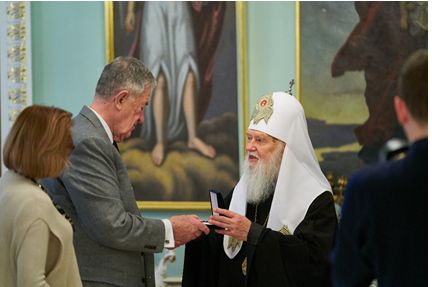
His Holiness Patriarch of Kiev and All Rus-Ukraine, Filaret has met with the former deputy director of the CIA Jack Devine.
During their meeting, Jack Devine expressed his sincere delight at the level of support for the idea of Ukraine receiving a Tomos of Autocephaly of the Ukrainian Orthodox Church.
He also remarked on the exceptional role of the Kievan Patriarch Filaret in his almost 30 years struggle for the formation of a Local Ukrainian Orthodox Church that is independent from Russia, and commended Filaret for defending the rights of Christians in front of the atheistic Soviet government.
Patriarch Filaret thanked Jack Devine for the help United States provides to Ukraine regarding the matters of Ukrainian independence and the formation of a Local Ukrainian Orthodox Church.
Following the presentation of the President of the Council of the “Ukraine the 21st Century” Fund, Bohdan Hubsky and a member of the Council of the Fund, Pavlo Yaroshenko, the Head of the Kiev Patriarchate awarded Jack Devine with the order of St. Andrew the First Called.

This one comes from Deutsche Welle, a propaganda arm of the Federative Republic of Germany, specifically its Ukrainian language office…
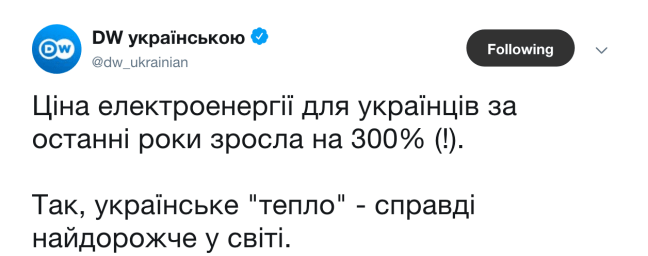
Basically, ordinary Ukrainians, whose salaries and pensions are already meagre, are forced to spend enormous sums from these minuscule gains of theirs on necessities that in Ukraine aren’t exactly cheap.
The result of the so called “Revolution of Dignity” has been poverty and war…
Five years have passed since protests gripped Ukraine, which led to the fall of the Yanukovych government and Ukraine’s firm orientation towards the West. I think that half a decade allows us to speak of a complete failure of the ideals of the Euromaidan, also called “Revolution of Dignity.” The revolution did not achieve dignity for the Ukrainian people, and arguably Ukraine at present is further from Europe than it has been when Yanukovych rejected the Association Agreement with the EU.
Ukrainians are one most miserable on the European continent, Ukraine is the poorest country in Europe. And as of today, almost 5 years into the Association Agreement, Ukraine is still not a candidate for membership in the EU, and it is highly unlikely Ukraine will become one within the next decade. The destiny of Ukraine is to be a grey zone between the EU and Russia. At loggerheads with the latter, and in an unequal relationship with the former.
Ukraine will continue to export goods with low added value, and resources such as grain, and timber. Such a country will not need the current level of population. No, Ukrainians will not die out but the question remains how many planters of buckwheat does the country need? And this situation shall continue until a political force in Ukraine emerges which returns back to a sensible policy towards Russia.

